Surprising Polar Bear Facts | A Day with a Mother and Cub
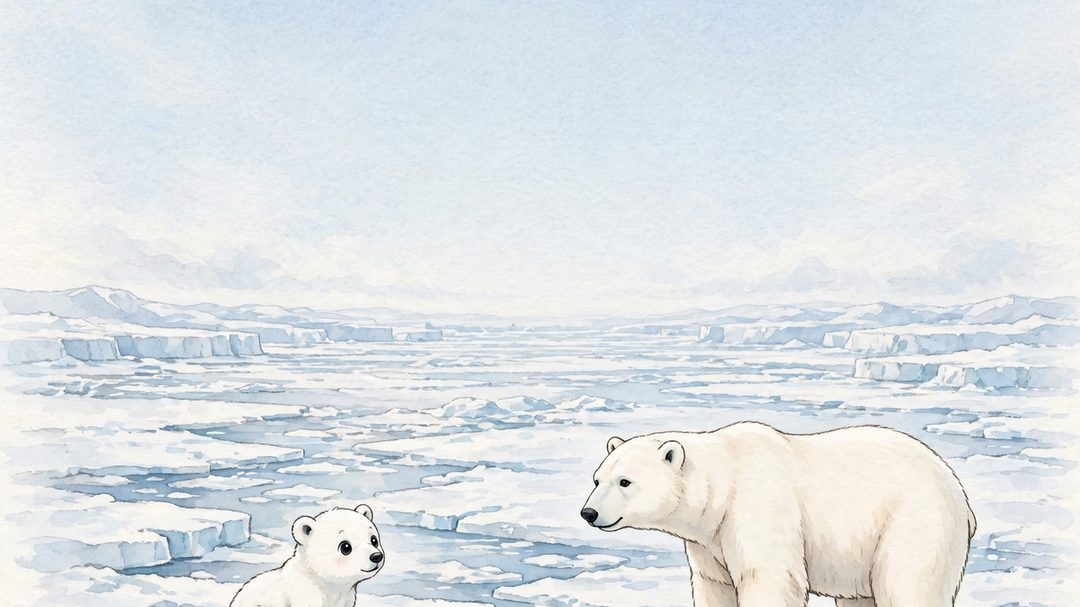
Today, we follow a polar bear mother and her cub, who live on the sea ice of the Arctic. A polar bear is a bear, and yet it makes its home at sea. Let us watch their slow, gentle day.
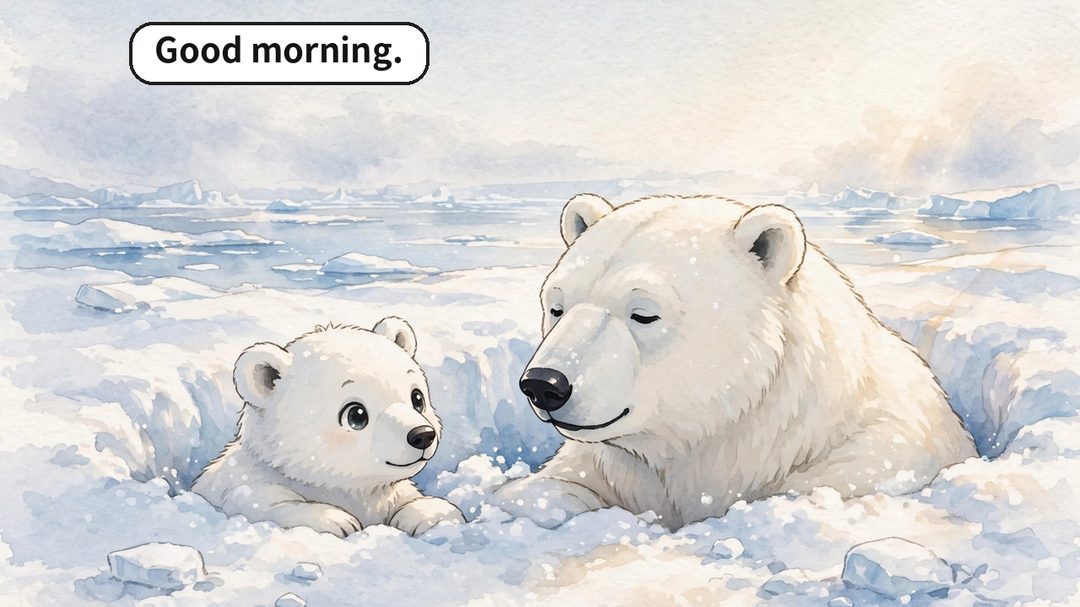
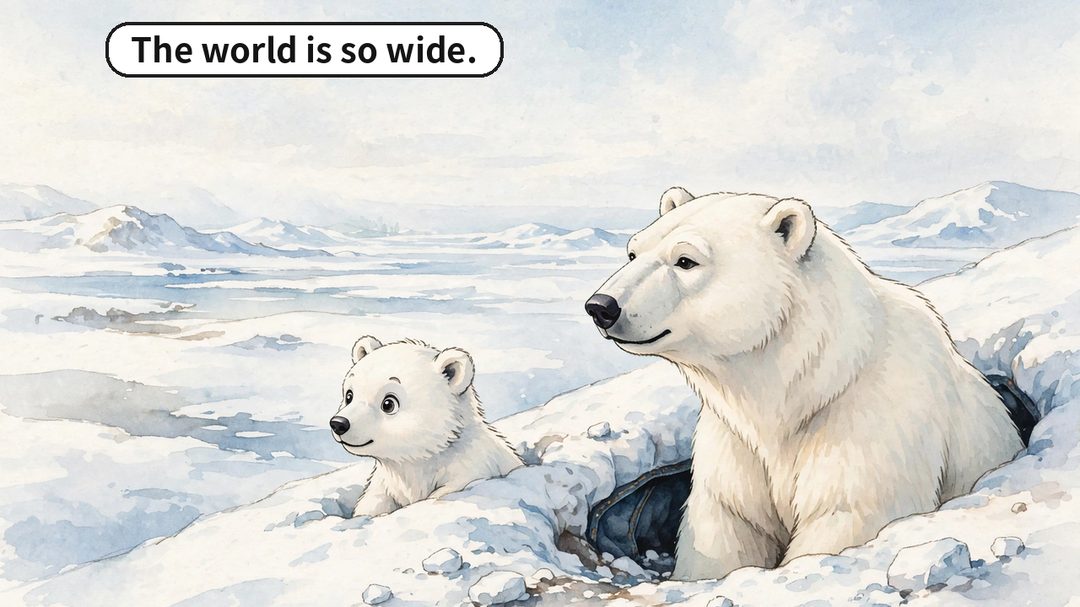
Morning light spread across the sea ice. Resting in a hollow in the snow, the mother bear slowly raised her head. A polar bear's name means "bear of the sea." The icy sea is where this mother and cub make their home. Beside her, the cub poked its face out of the snow.
Copying its mother, it lifted its nose up high.
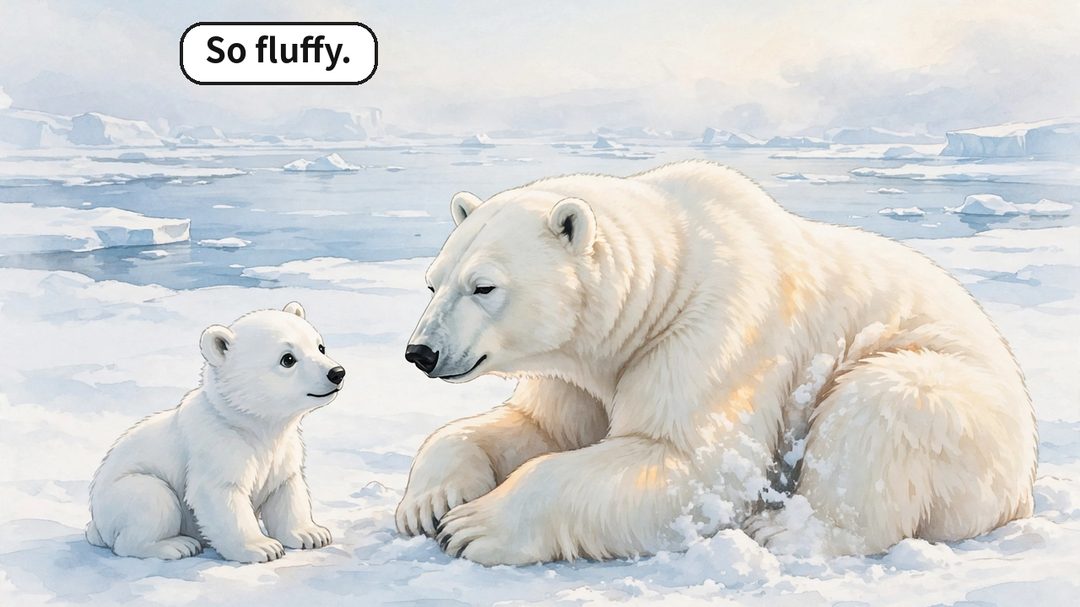
In the morning light, the mother's fur shone white. But that fur held a surprising secret. A polar bear's fur is not colored white. Each hair is clear, and it scatters the light, which is why it looks white. What is more, the skin beneath that fur is black.
That is why the nose and lips are black, too.
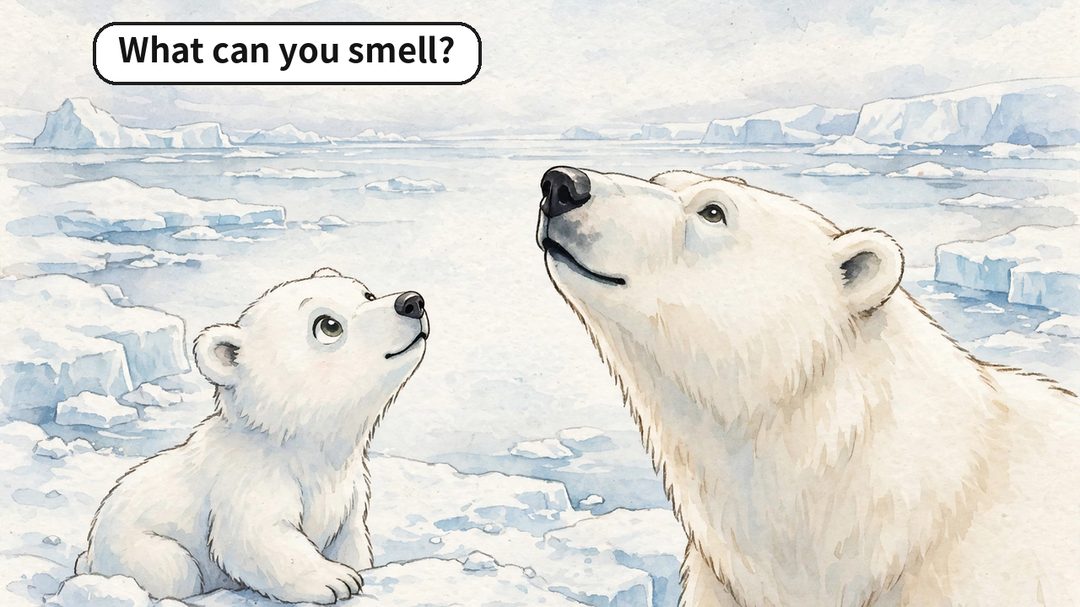
The mother sniffed the wind. A polar bear's nose is very sharp. It is said to be able to pick out the smell of a seal's breathing hole a kilometer away. The cub copied her and raised its nose, too. It did not seem to smell anything yet, and the mother gently touched her nose to it.
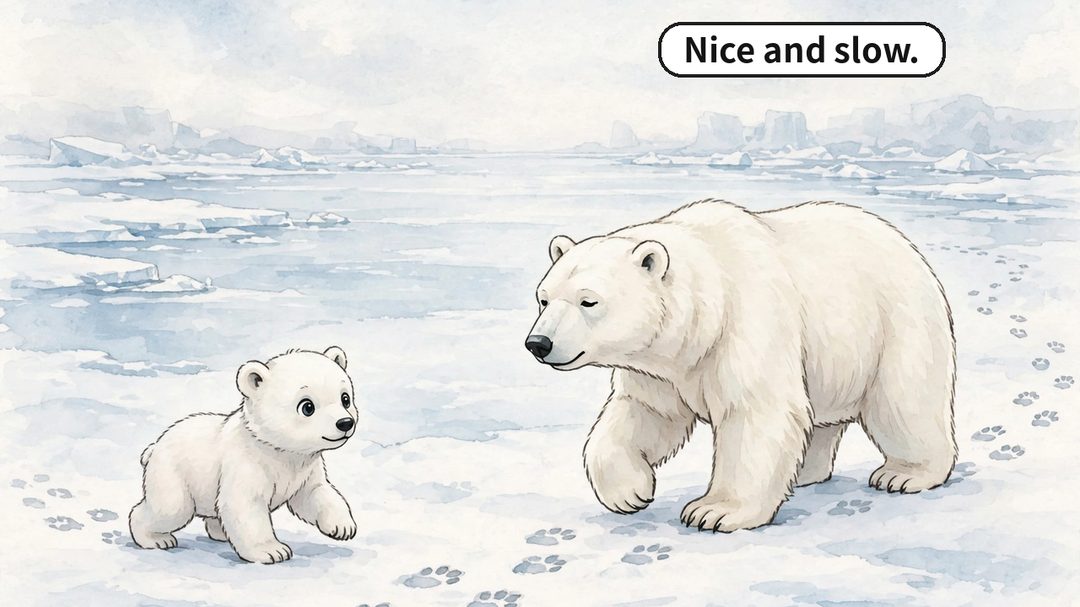
The pair began to walk across the ice. A polar bear is an animal that walks with the whole sole of its foot pressed flat to the ground. In some seasons, it is said, a polar bear may travel more than a thousand kilometers in a single season.
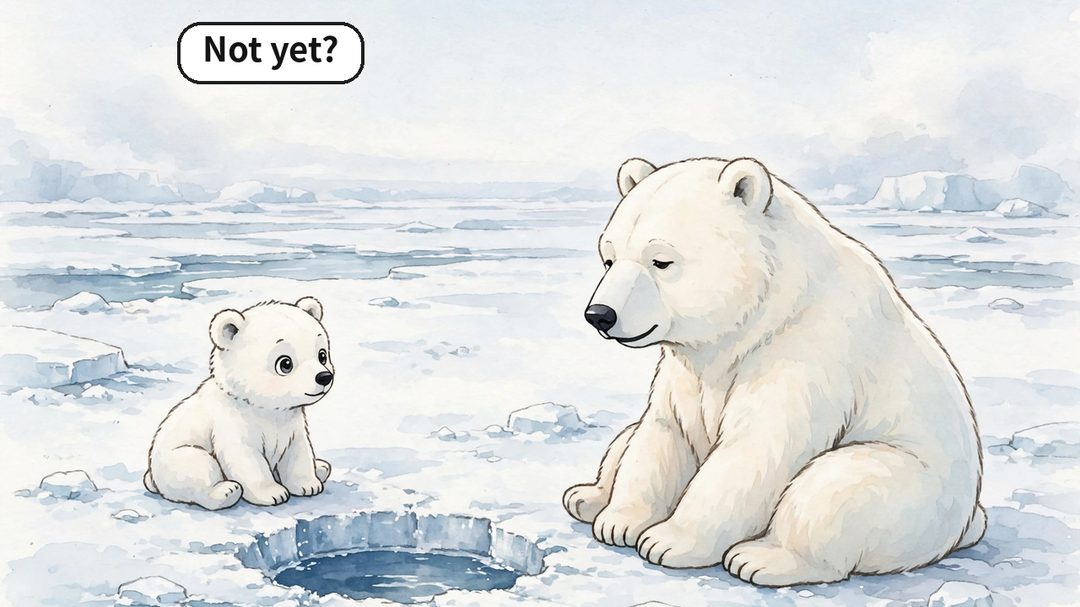
Today, the pair walks slowly.
Beside a small hole in the ice, the mother sat down and stayed still. She would wait quietly for hours for a seal to come up for air. The cub sat small beside her. Learning to wait was an important lesson for life.
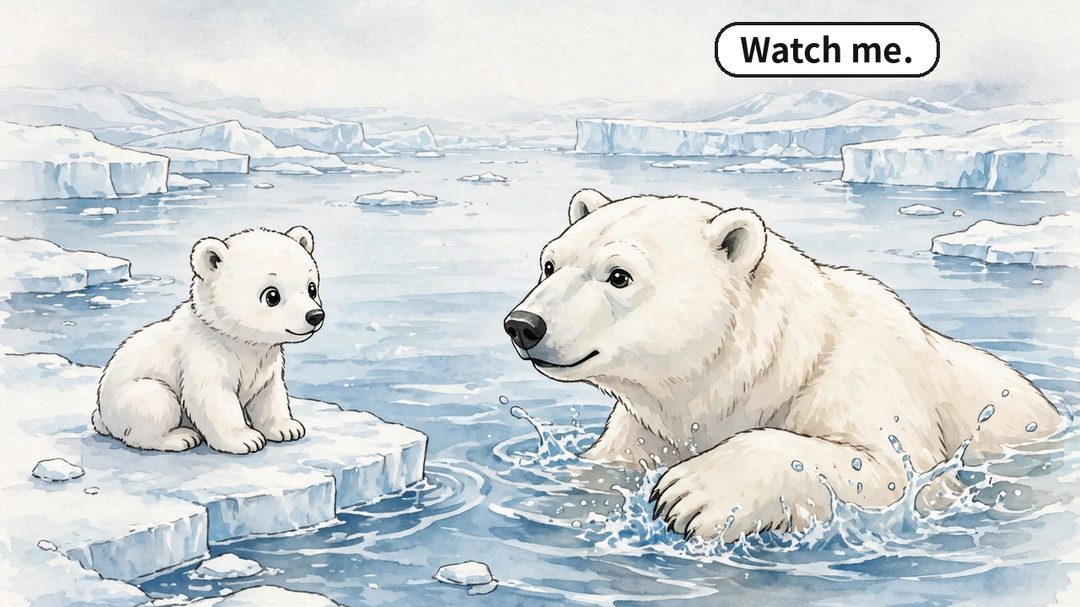
At last, the pair reached the water's edge. Without hesitating, the mother slipped into the sea. The mother swam, moving her big front paws like oars. Her hind legs worked like a rudder in the water. Swimming is a polar bear's special skill.
Sometimes, it is said, one can keep swimming for days.
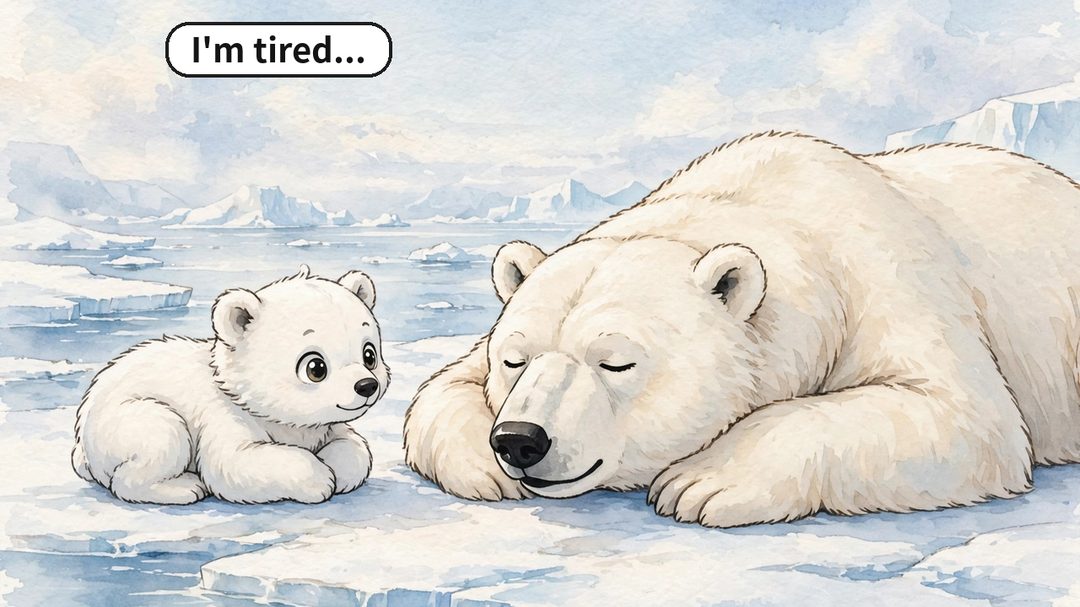
Back on the ice, the mother let out a big breath and lay down. Thick fat and fur keep her safe from the cold, but if she keeps moving, her body grows too hot. That is why polar bears rarely run. Walking slowly and saving their strength was this pair's way.
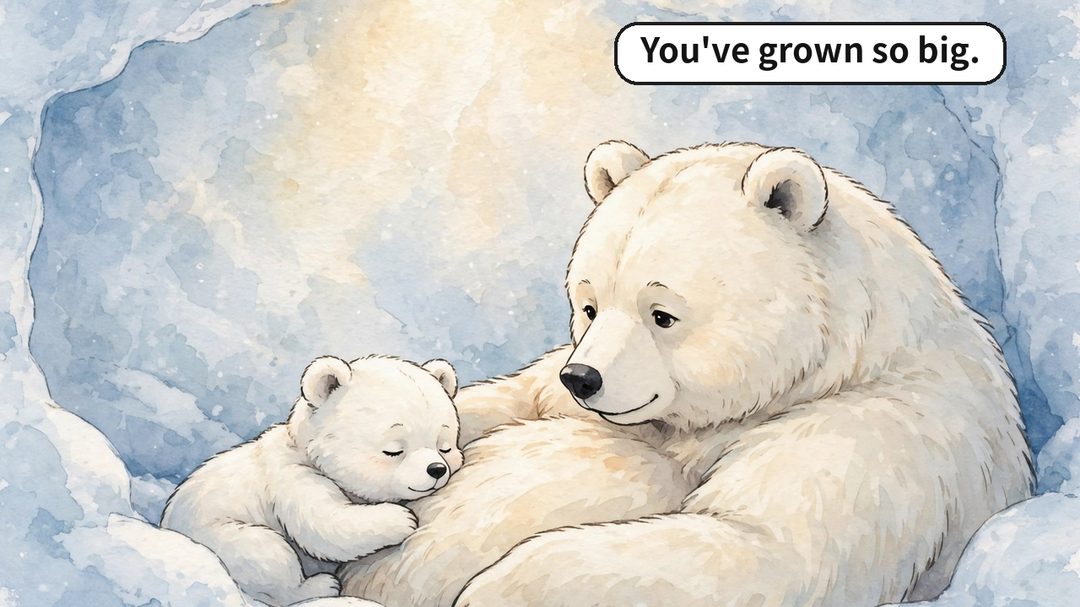
The cub buried its face in its mother's belly. This little one was born inside a den dug into the snow. At birth, it weighed only about six hundred grams. Its eyes were not open yet, either. All that time, the mother stayed in the den without eating a thing.
At its longest, the fast lasted about eight months. The fat stored in her body kept mother and cub alive.
When spring came, the pair came out of the den. By then, the cub weighed about ten kilograms. For a while, they stayed near the den, letting the cub grow used to the cold. What made the cub grow so well was its mother's milk.
Polar bear milk is said to have the most fat of any bear's.
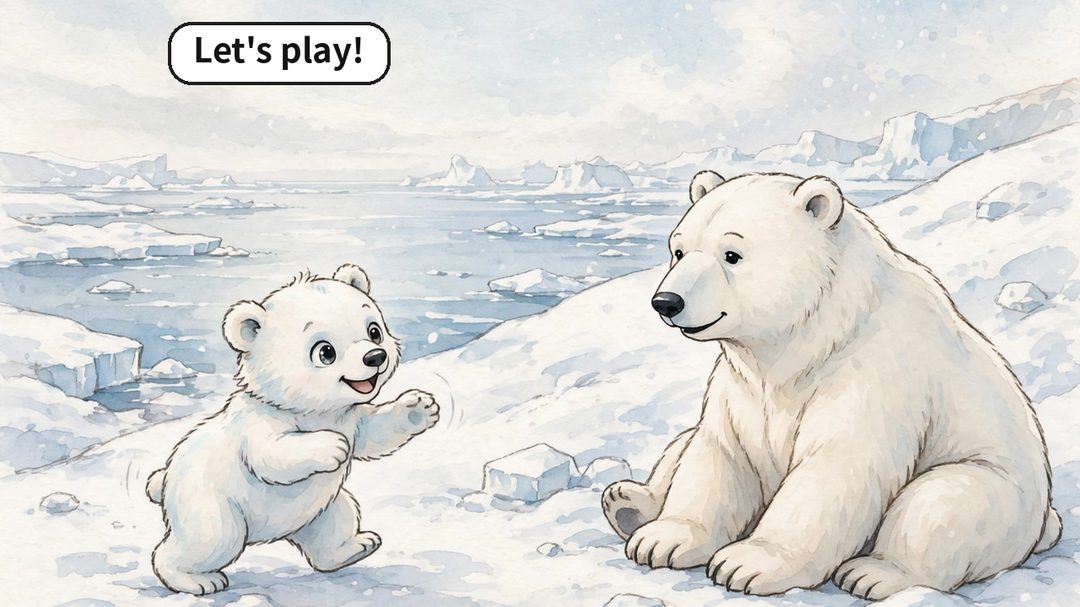
Near midday, the cub stood before its mother and swung its head from side to side. That is a polar bear's signal for inviting play. The pair tumbled and played on the snowy slope. Through play, the cub was building the strength it needs to live.
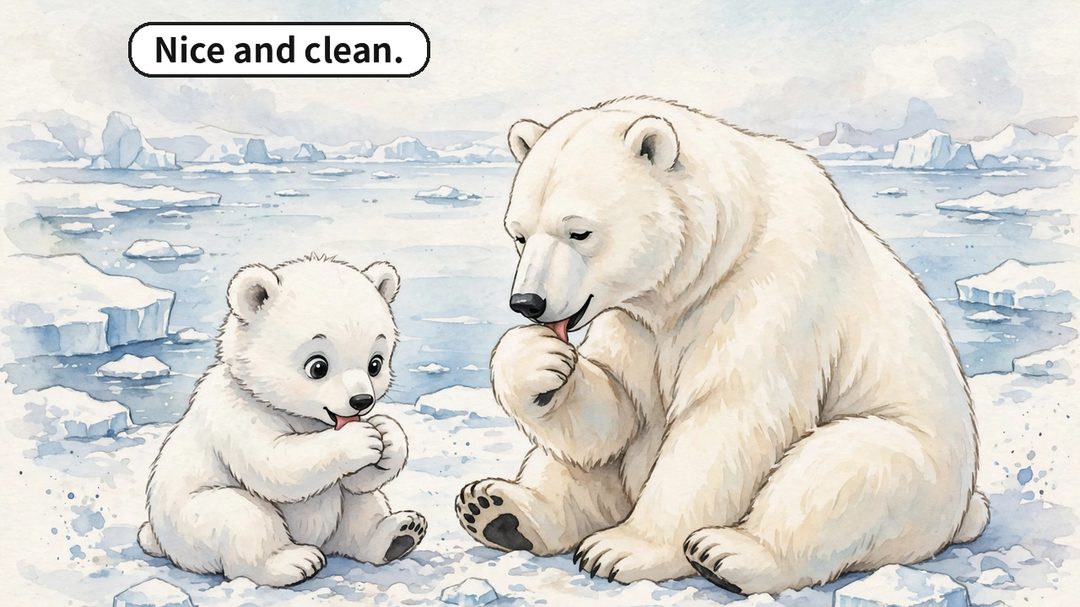
After playing their fill, it was time to rest. The mother licked a front paw and began to groom her fur. After meals, too, a polar bear keeps its body clean in this way. The cub copied her and licked its little front paw. Its white fur grew soft and fluffy again.
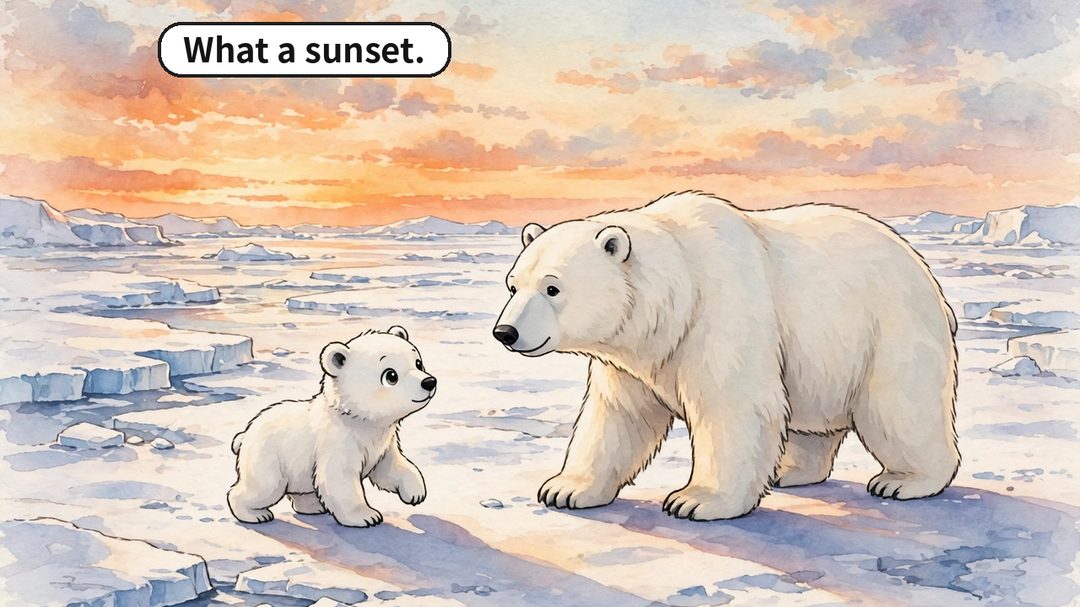
As the sun leaned low, the ice field was dyed in the colors of the sunset. The pair's shadows stretched long across the snow. Now and then, the mother stopped and waited for the cub to catch up. The cub hurried after her at a trot, then walked on again.
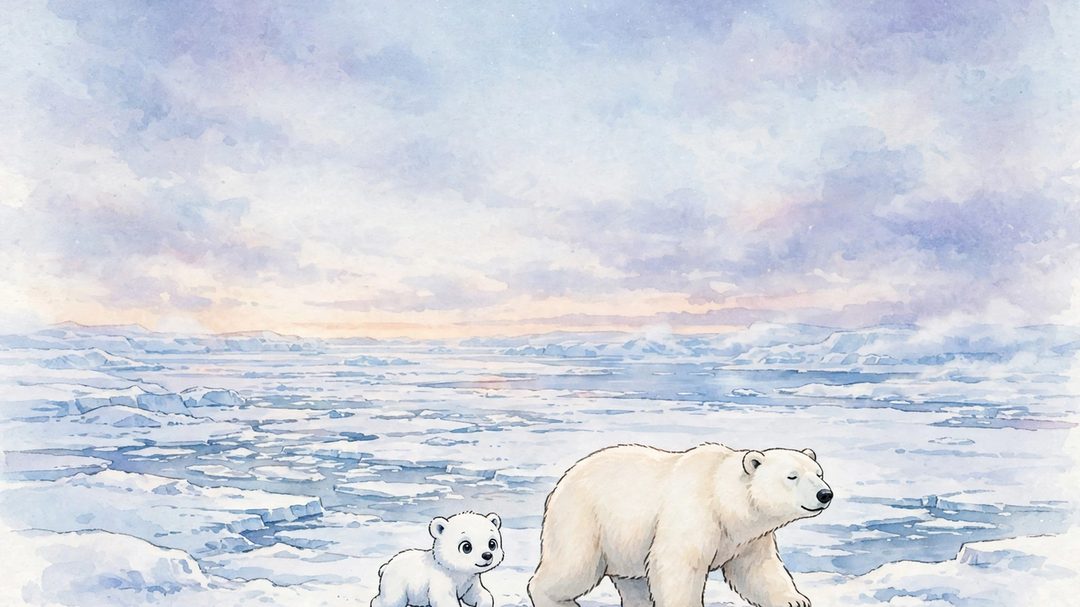
This cub will stay with its mother for about two and a half years. In that time, it will learn everything about life on the ice. One day, the cub will begin to live on its own. Adult polar bears are animals that basically live alone.
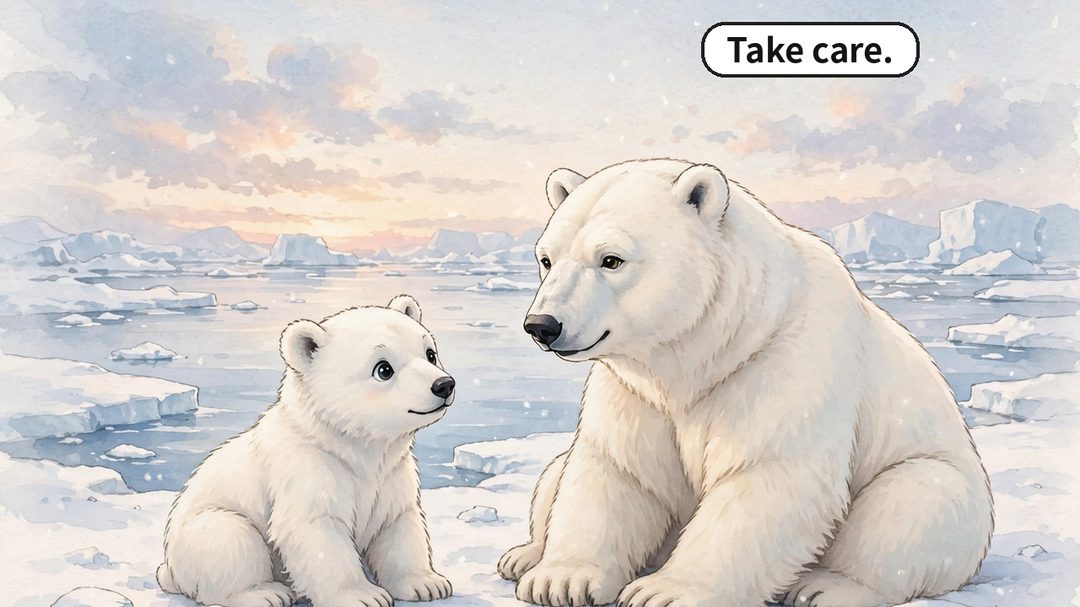
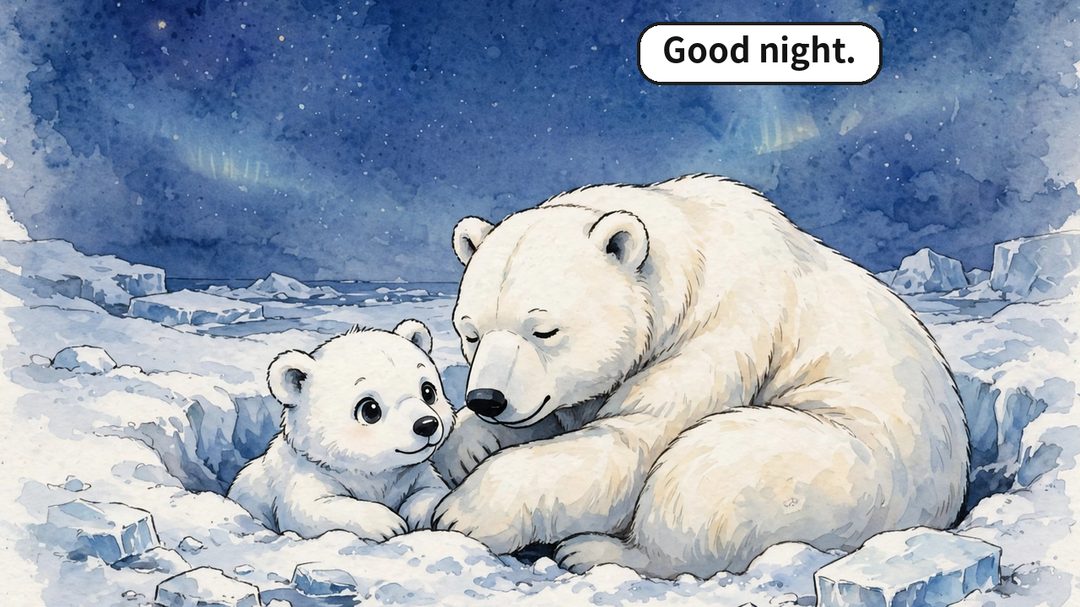
By the time the sky had turned deep indigo, the pair had chosen a hollow in the snow to rest in. The mother let out a series of soft, short breaths. It was a signal only for her cub, the call she uses to summon it.
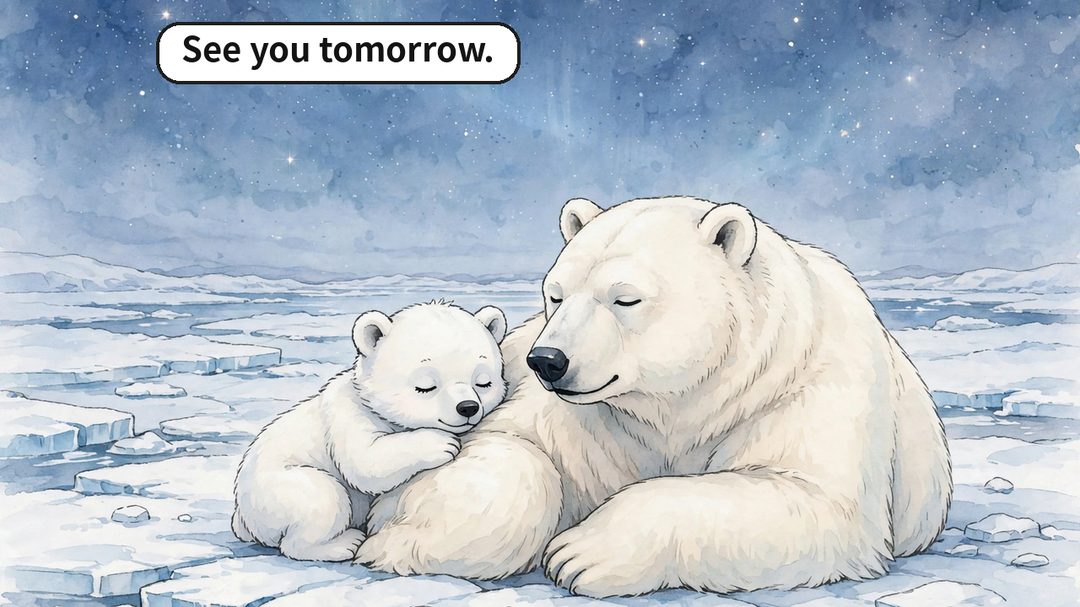
Stars began to appear. The cub leaned against its mother's big back and closed its eyes. Clear fur, a sharp nose, and the strength to swim the sea. Born so small, and grown so big. The pair's gentle day quietly came to an end.
On the wide sea ice, another day of the pair's life passed by today. Tomorrow, too, out on the ice.
Knowledge cards
Sources
- San Diego Zoo Wildlife Alliance Library「Polar Bear (Ursus maritimus) Fact Sheet: Summary」https://ielc.libguides.com/sdzg/factsheets/polarbear
- San Diego Zoo Wildlife Alliance Library「Polar Bear Fact Sheet: Diet & Feeding」https://ielc.libguides.com/sdzg/factsheets/polarbear/diet
- San Diego Zoo Wildlife Alliance Library「Polar Bear Fact Sheet: Behavior & Ecology」https://ielc.libguides.com/sdzg/factsheets/polarbear/behavior
- San Diego Zoo Wildlife Alliance Library「Polar Bear Fact Sheet: Reproduction & Development」https://ielc.libguides.com/sdzg/factsheets/polarbear/reproduction
- Polar Bears International「Polar Bear Facts」https://polarbearsinternational.org/polar-bears/polar-bear-facts/
- The animals' conversations (speech bubbles) in the stories are imagined.