Surprising Penguin Facts | Raising a Chick in Antarctica
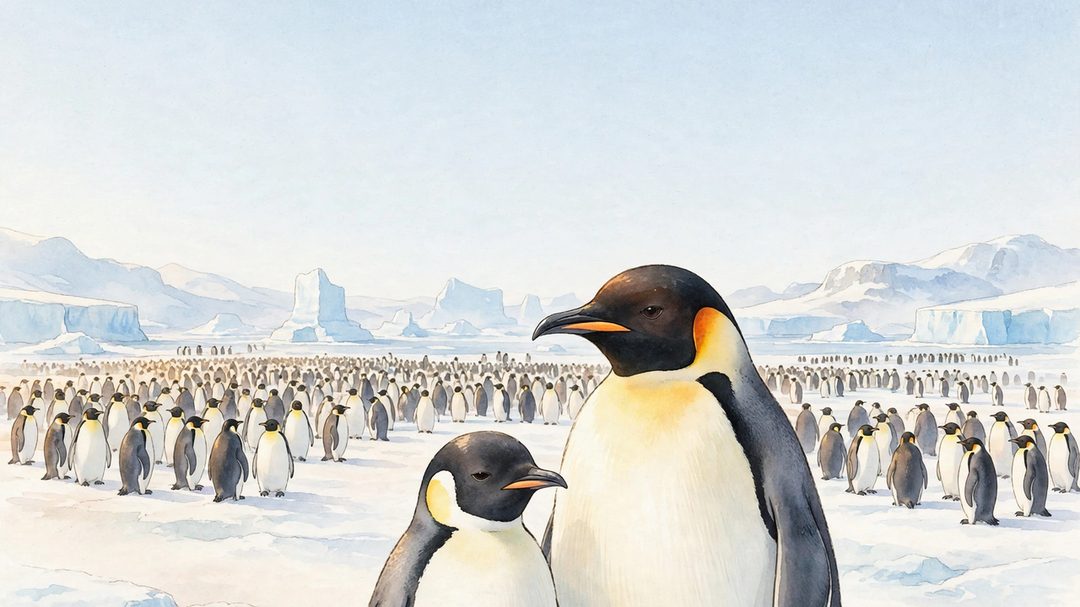
Today, we follow an emperor penguin family raising their chick in Antarctica. On the ice, they warm an egg, travel to the sea for food, and raise their chick. We will look at the small, clever ways they manage it all.
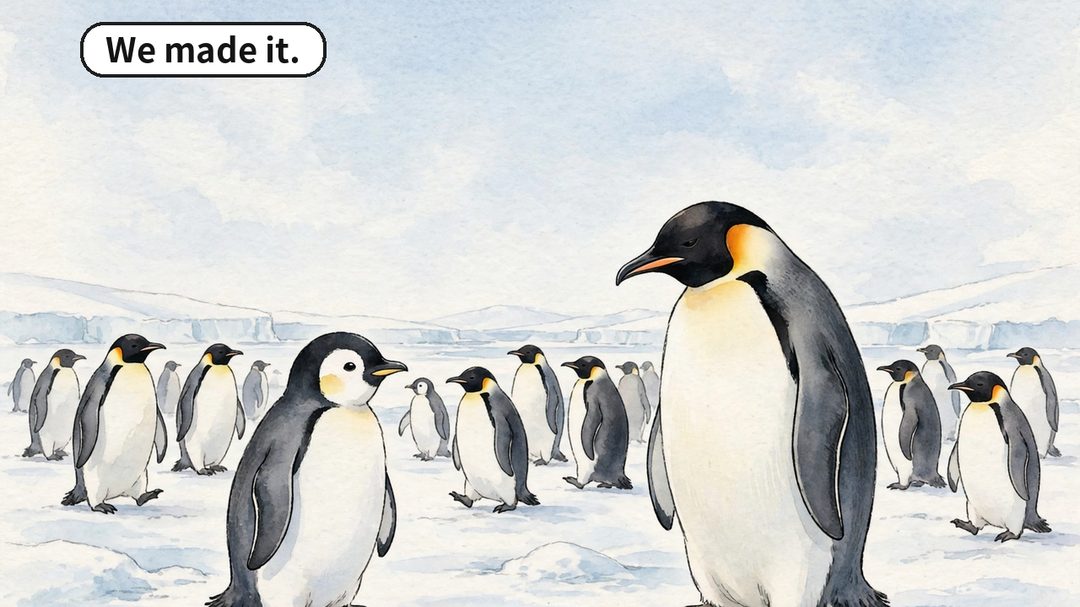
Autumn has come to Antarctica. On the icy plain, a great crowd of emperor penguins has gathered. Emperor penguins have the largest bodies of any penguin. And of all penguins, only the emperor penguin raises its chick through the winter.
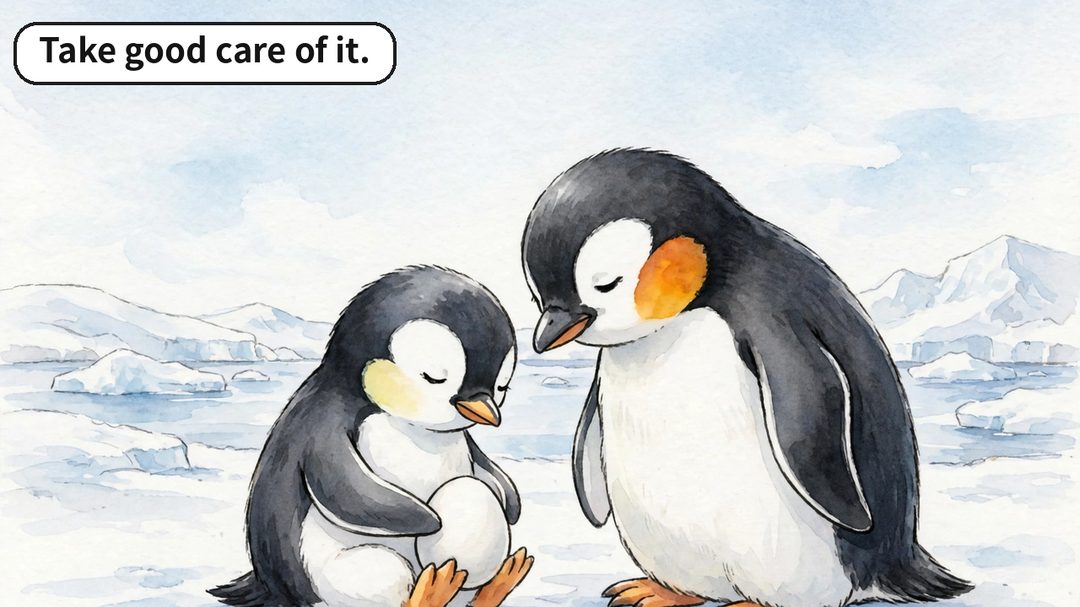
Here, we will watch over one single egg, and the chick that hatches from it, for a whole season.
Before long, the mother laid a single white egg. The egg cannot be laid directly on the ice. If it touched the cold ice, it would freeze at once.
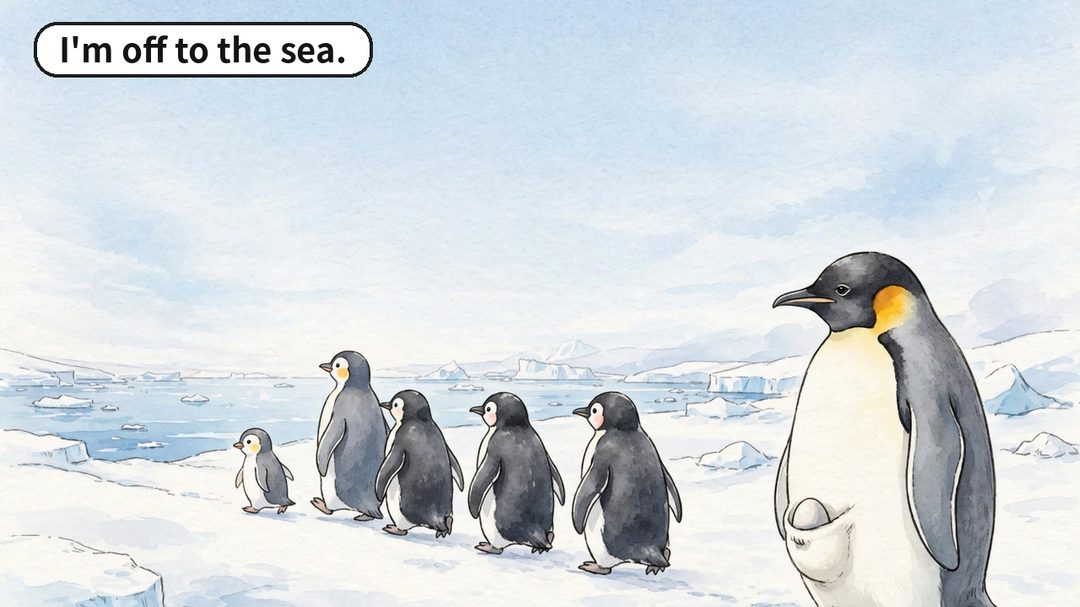
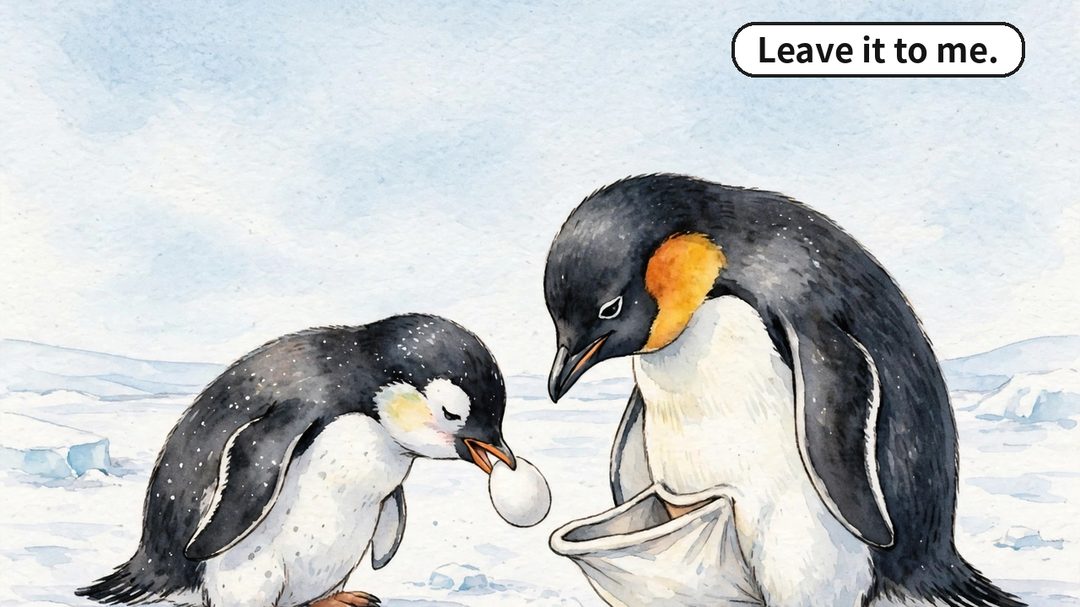
Gently, the mother passed the egg to the father. The father balances the egg on top of his feet to keep it warm. A fold of skin on his belly, called a brood pouch, wraps right around the egg.
With the egg in the father's care, the mother set off for the sea, to feed. The sea she is heading for lies more than one hundred kilometers away from here. In a line with her companions, the mother walked away across the ice.
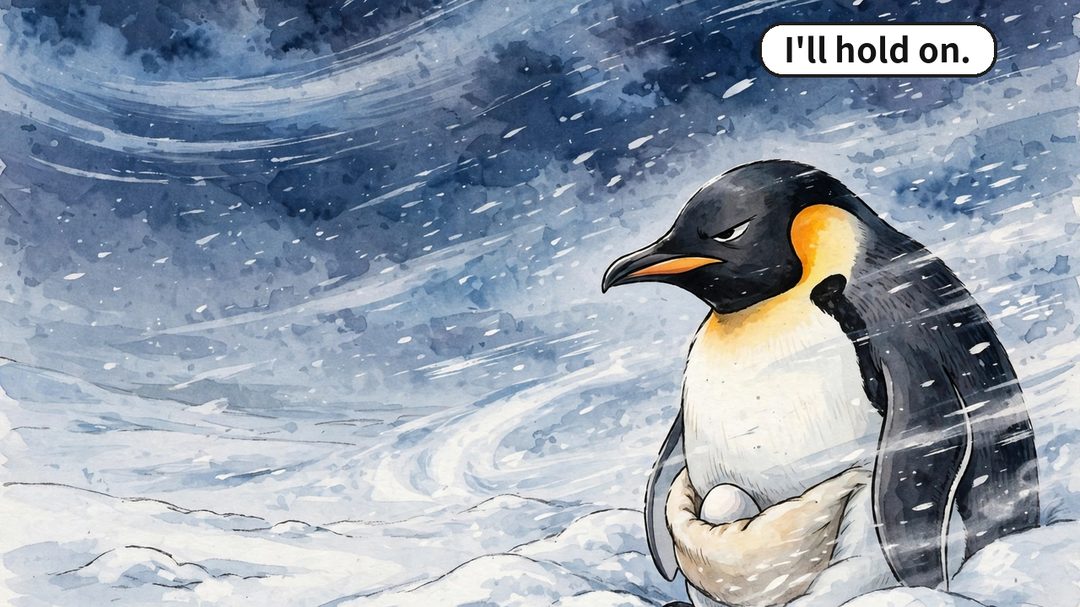
Once he had seen her off, Antarctica entered its harsh winter. While he warms the egg, the father goes about two months without eating anything at all. Even on days of driving snow, the father stands firm, guarding the egg on his feet.
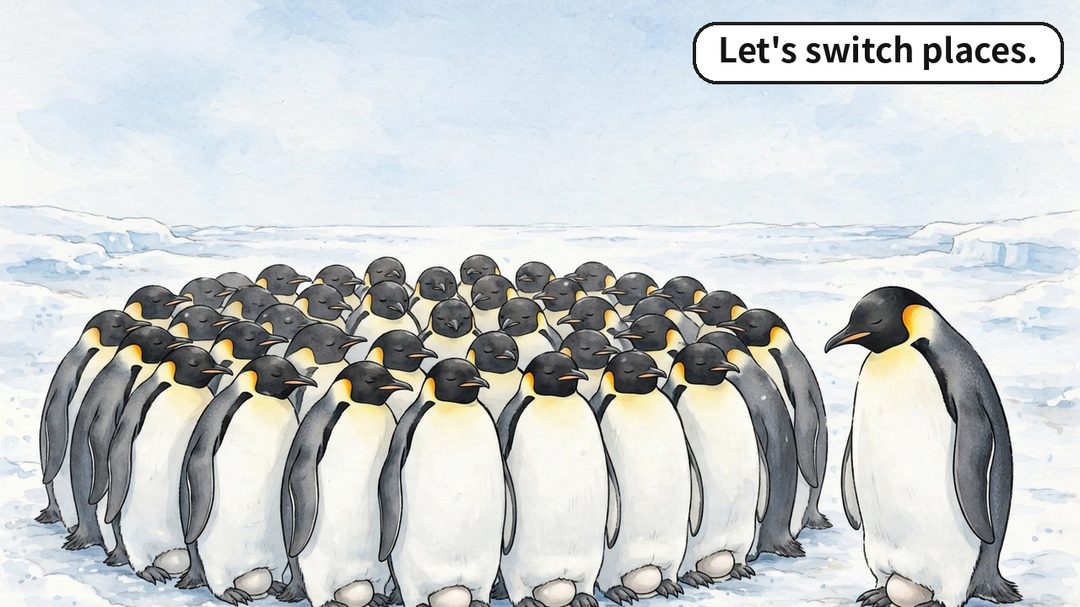
As the cold grew still more severe, the fathers pressed their bodies close together. Penguins form a tight circle called a huddle, slowly trading places between the outside and the inside. In this way, they all share the cold, and get through the winter together.
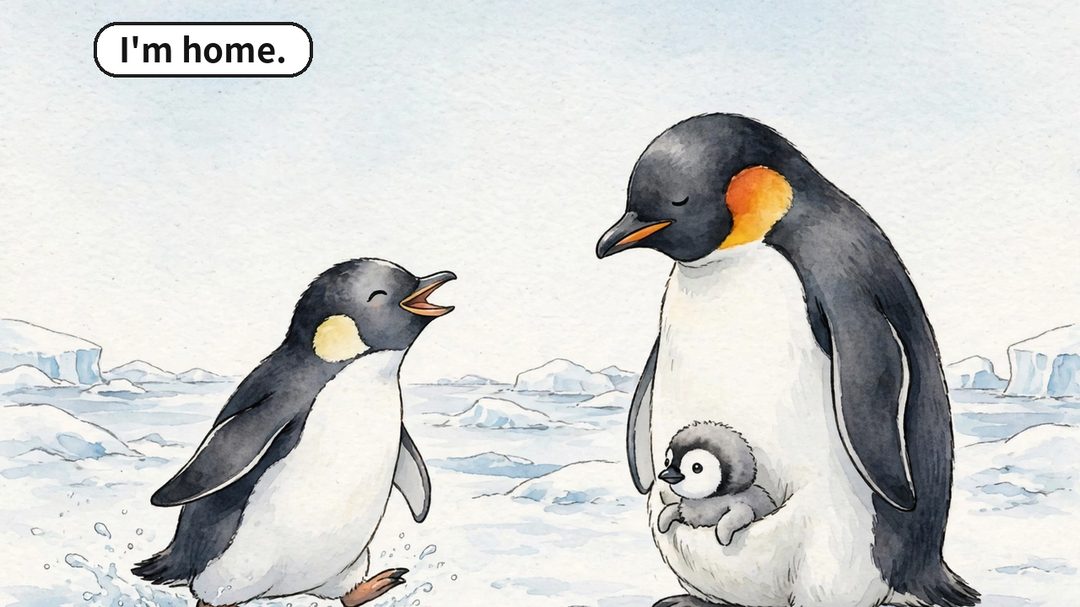
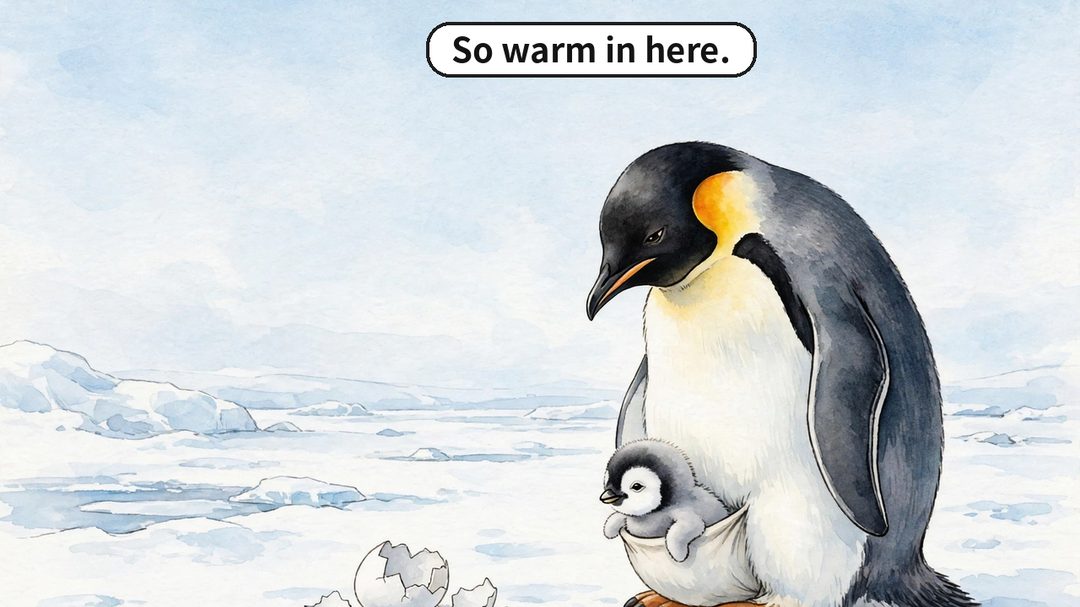
One day, the egg on his feet gave a small shake. The chick that hatched was a tiny life, wrapped in gray downy feathers. If the mother's return is delayed, the father can feed the chick a white substance his own body produces.
Around that time, from the direction of the sea, the mother's call could be heard. Out of thousands of companions, parent and chick pick out each other's calls, and find one another. The father gently handed the chick over to the mother.
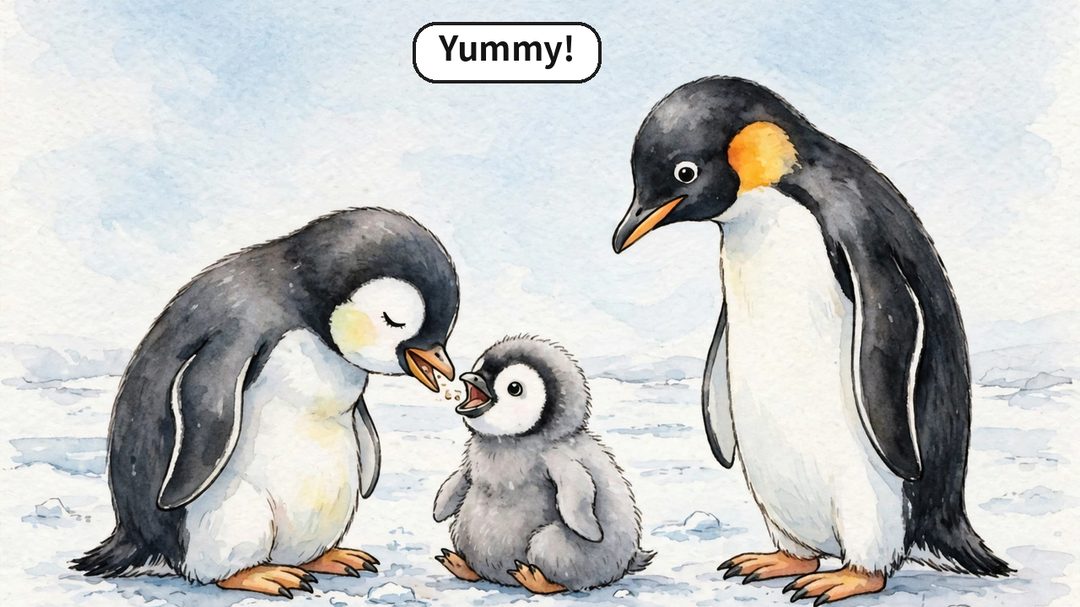
The mother brought back up the food she had eaten at sea, and fed it to the chick. Its belly full, the chick fell quietly asleep on its mother's feet.
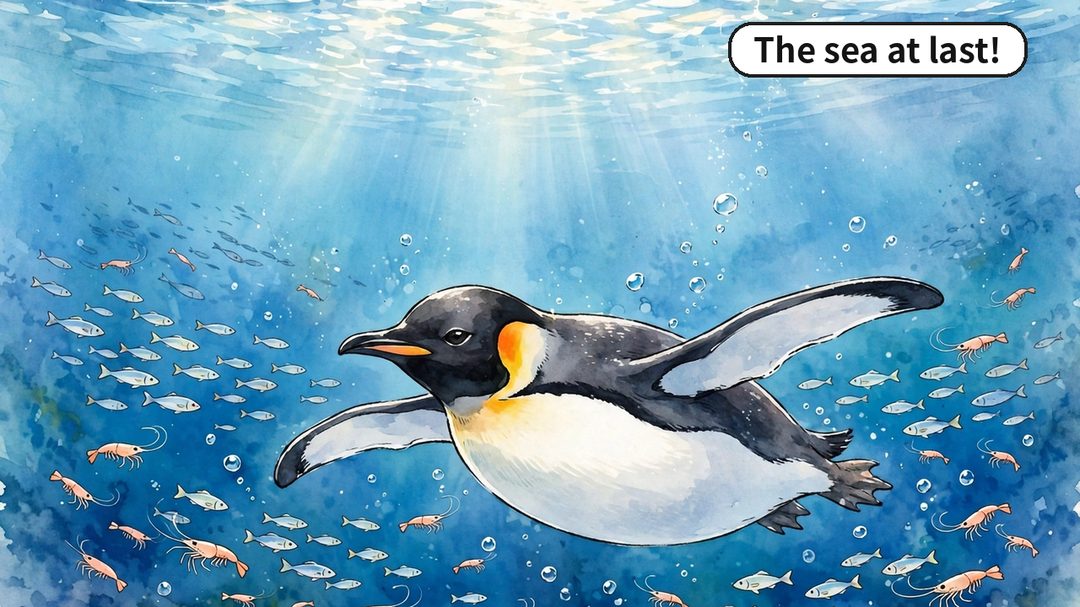
Now it was the father's turn to head out to sea. In the water, a penguin flaps its wings and swims as if it were flying. In the sea he had not seen for so long, the father chased fish and krill.
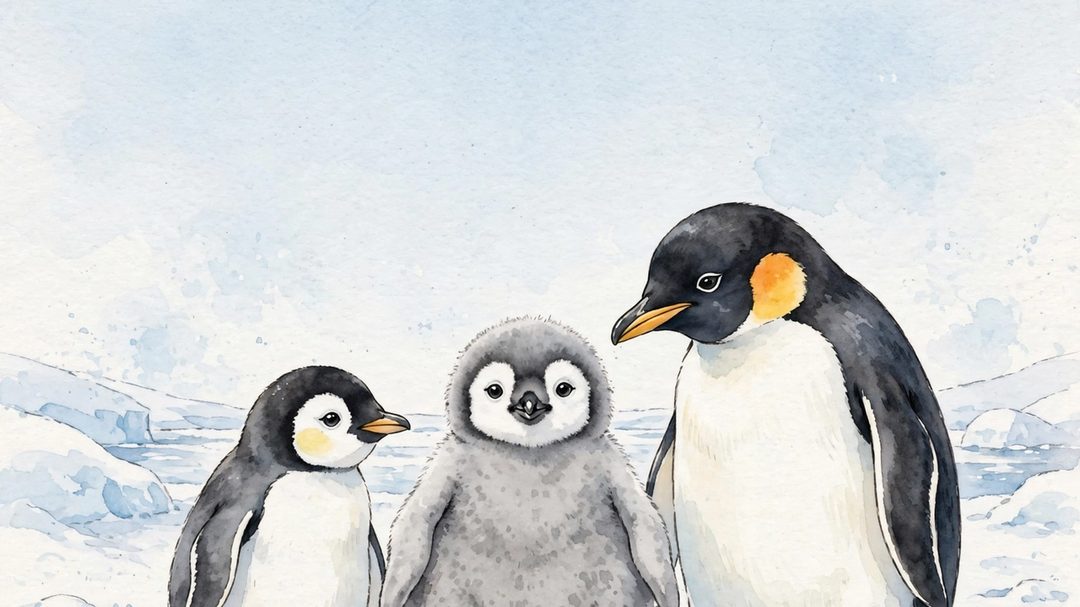
From then on, father and mother took turns going to the sea, bringing food back to the chick. Day by day, the chick grew bigger.
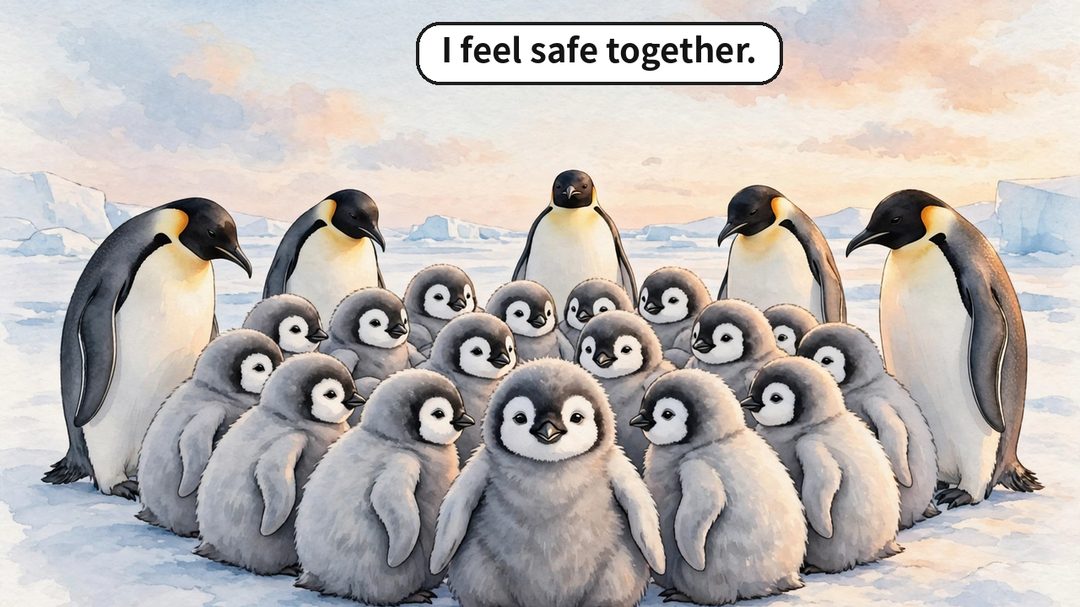
Once the chick had grown, both parents began going out to sea together. While their parents are away, the chicks gather together in a group called a creche, huddling close. At night, too, the chicks press their bodies together, keeping out the cold.
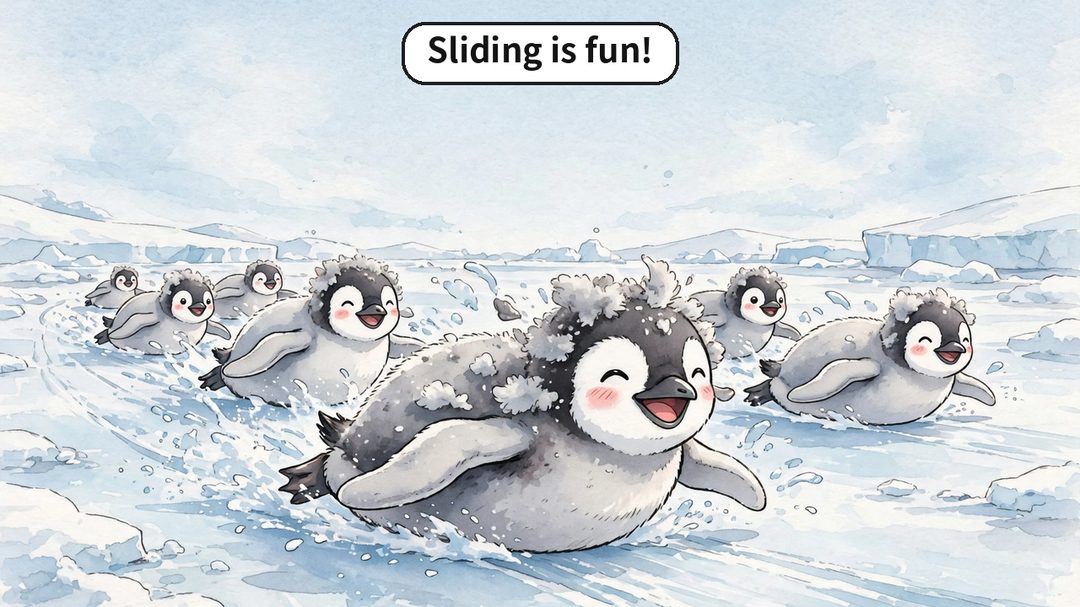
Penguins sometimes travel by sliding across the ice on their bellies. The young penguins slide, get up, and slide again, moving along as if at play.
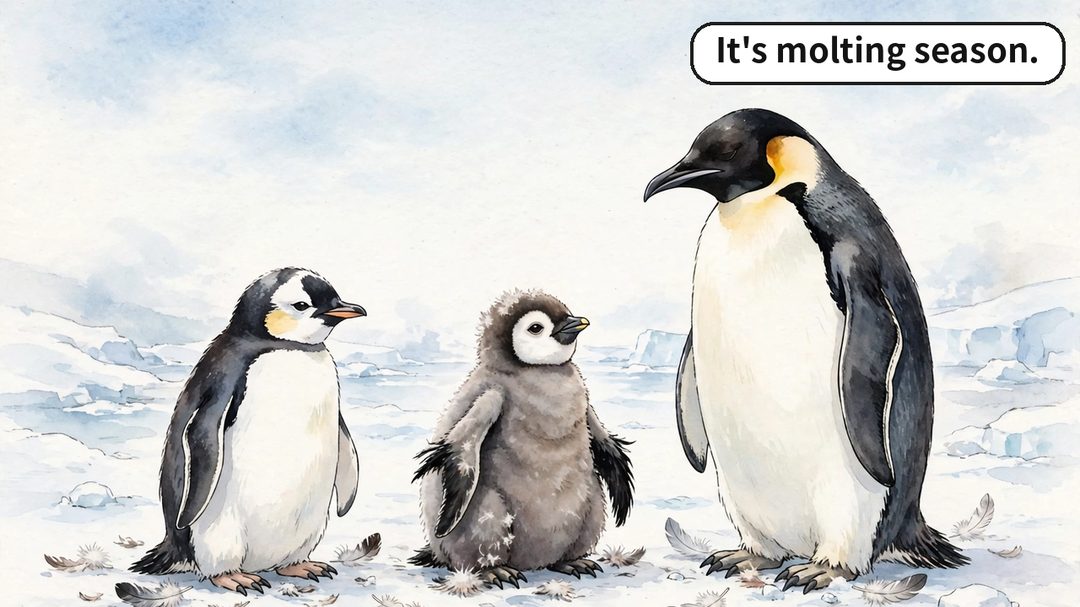
As summer neared in Antarctica, molting season came for the parents. While their feathers are being replaced, the feathers cannot shed water. During the molt, a penguin cannot go into the sea. On the chick's wings, too, black adult feathers were slowly growing in.
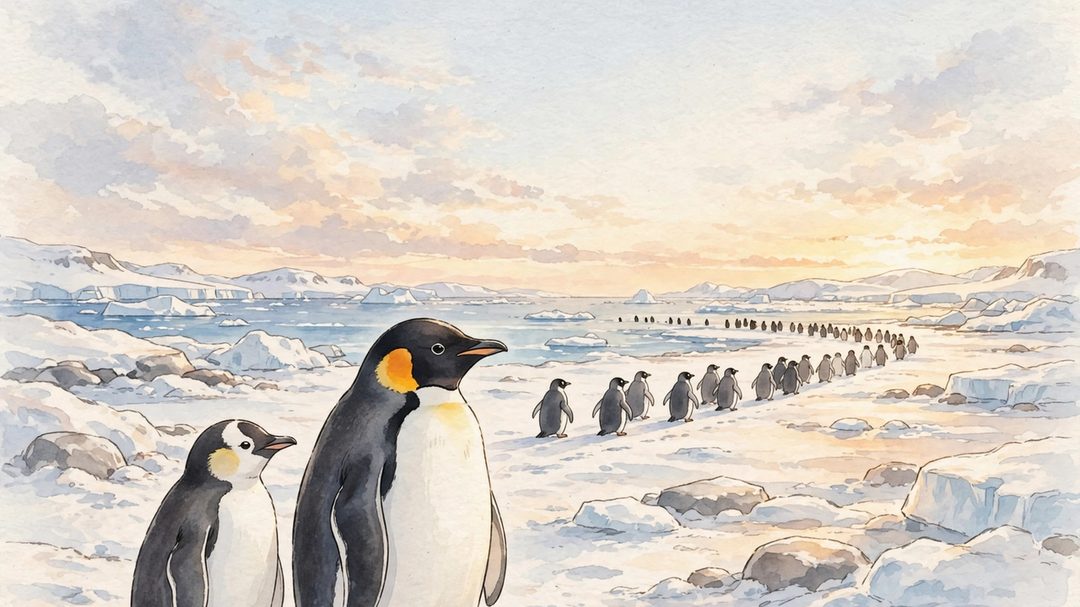
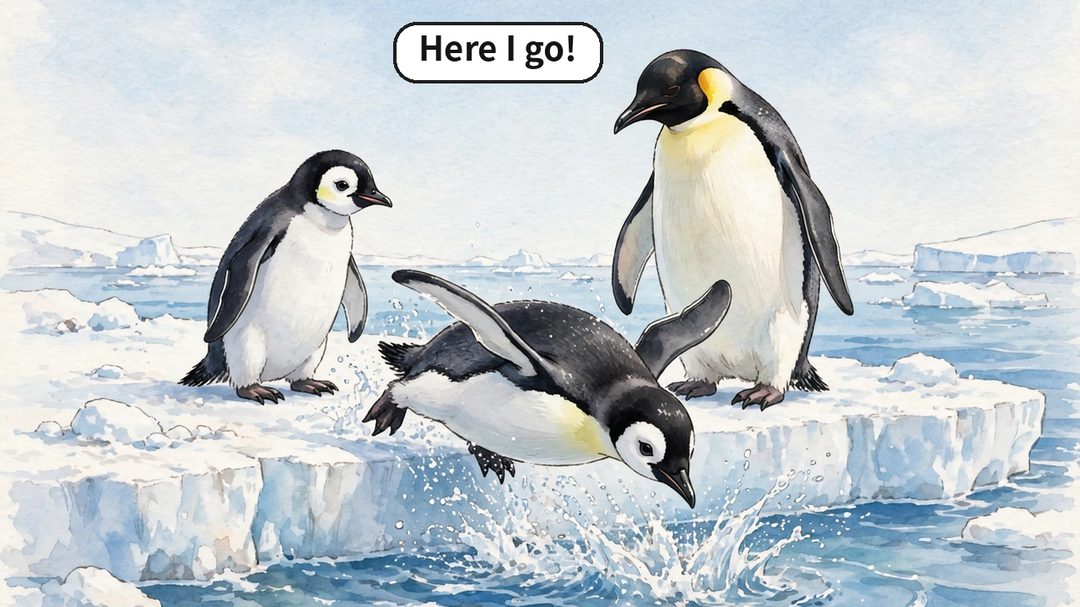
Its down shed and replaced by adult feathers, the young bird headed for the sea for the first time. Diving into the water, it flapped its wings and swam as if it were flying.
Warming an egg on the ice, traveling between the sea and the nest to raise a chick — emperor penguin parenting was built on parents taking turns, and the clever ways of the whole group.
Knowledge cards
Sources
- 国立極地研究所「南極ってどんな生き物がいるの?」(学研 子育てマップ)https://kosodatemap.gakken.jp/learning/science/41962/
- Australian Antarctic Division「Emperor penguin breeding cycle」https://www.antarctica.gov.au/about-antarctica/animals/penguins/emperor-penguins/breeding-cycle/
- Australian Antarctic Division「Penguins」https://www.Antarctica.gov.au/about-antarctica/animals/penguins/
- Australian Antarctic Division「The Emperor Penguin(Dr Barbara Wienecke)」https://www.emperor-penguin.com/emperor.html
- San Diego Zoo Wildlife Alliance Library「Penguin Fact Sheet」https://ielc.libguides.com/sdzg/factsheets/africanpenguin/characteristics-page
- The animals' conversations (speech bubbles) in the stories are imagined.