Surprising Kangaroo Facts | A Day with a Mother and Joey
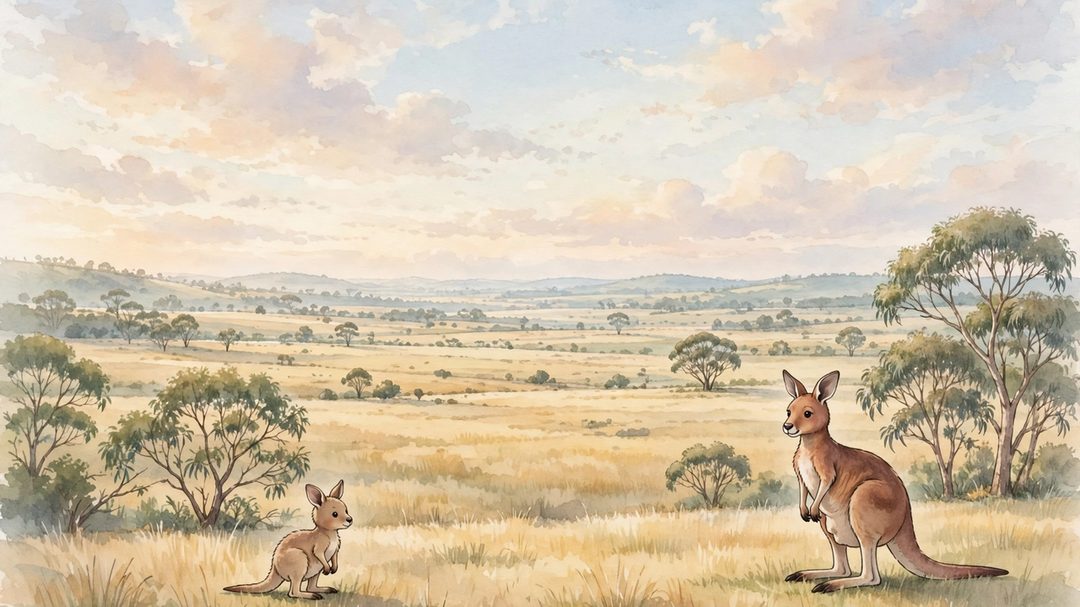
Today, we follow a kangaroo mother and her joey, who live on the grasslands of Australia. The kangaroo is an animal that travels by hopping. Its big hind legs, its long tail, and the pouch on its mother's belly hold many secrets. Let us watch their day.
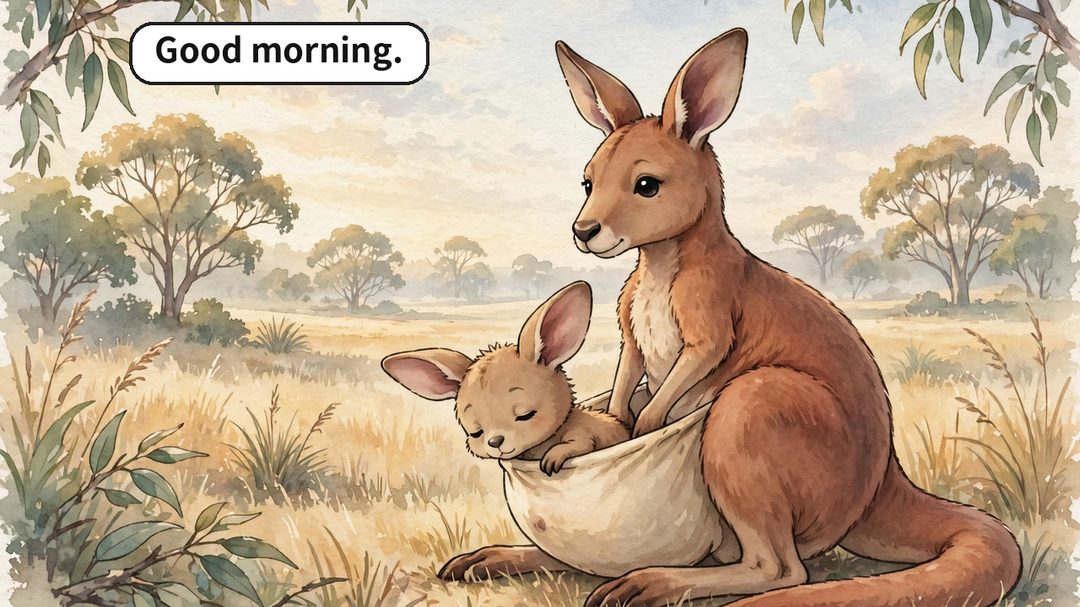
As dawn broke and the grassland turned morning colors, resting in the shade of a tree, the mother kangaroo slowly opened her eyes. Kangaroos are marsupials, animals that raise their babies in a pouch. They are the largest of the marsupials, and standing up, they can be as tall as an adult human. Kangaroos are most active in the morning and evening.
The joey, too, woke up inside its mother's pouch.
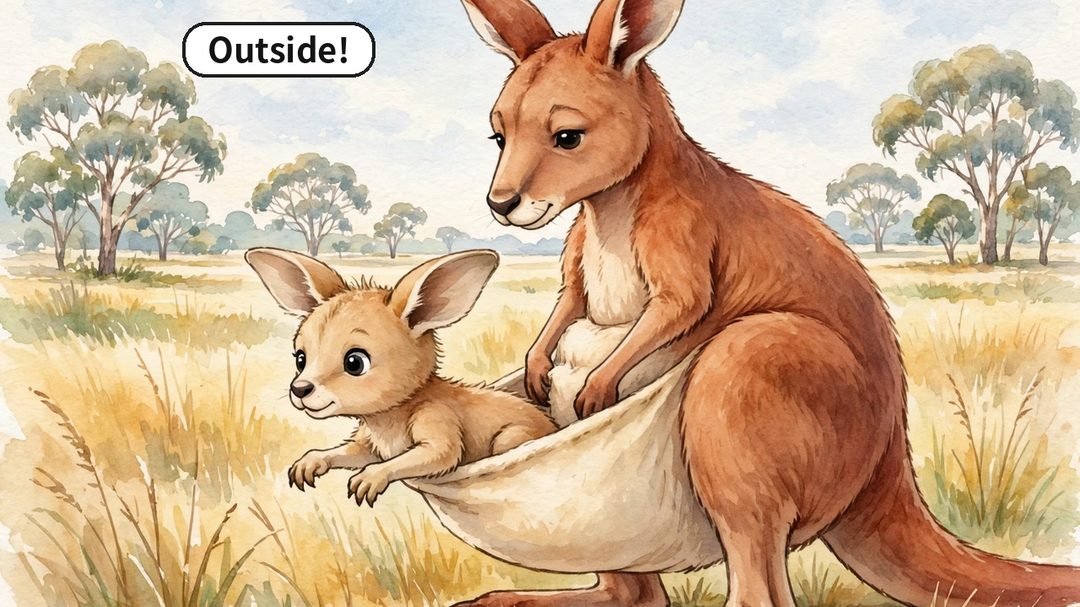
From the pouch on its mother's belly, the joey popped its face out. It looked around the morning grassland, glancing here and there. When this baby was born, it weighed only about one gram. It is said that a newborn baby climbs up its mother's belly by its own strength and reaches the pouch in about three minutes.
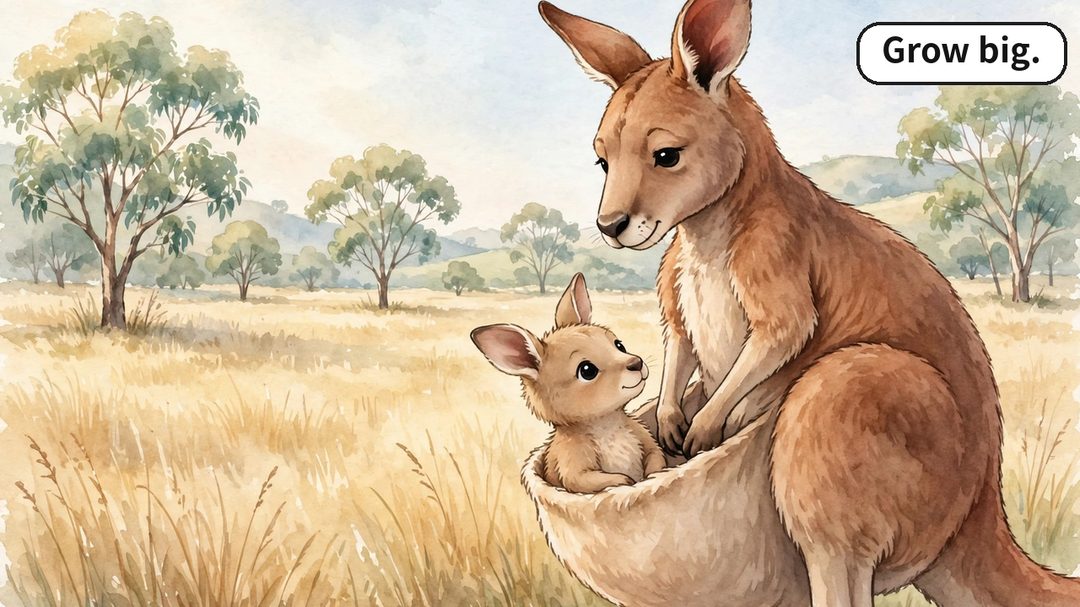
The baby spends about eight months inside the pouch. Drinking milk, it grows little by little. From time to time, the mother cleans the inside of the pouch. While the joey waits outside, she cleans it carefully.
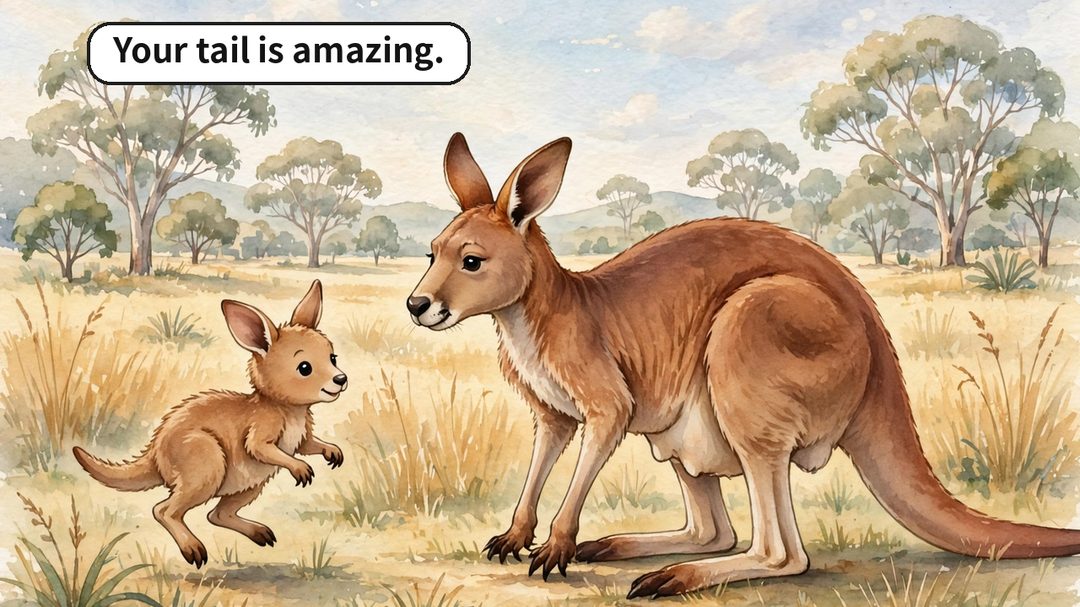
Looking for morning grass, mother and joey walk slowly. When walking slowly, a kangaroo puts its long tail on the ground and uses it like a fifth leg. The joey followed beside its mother with small hops. Now and then, wanting to go back into the pouch, it looked up at its mother.
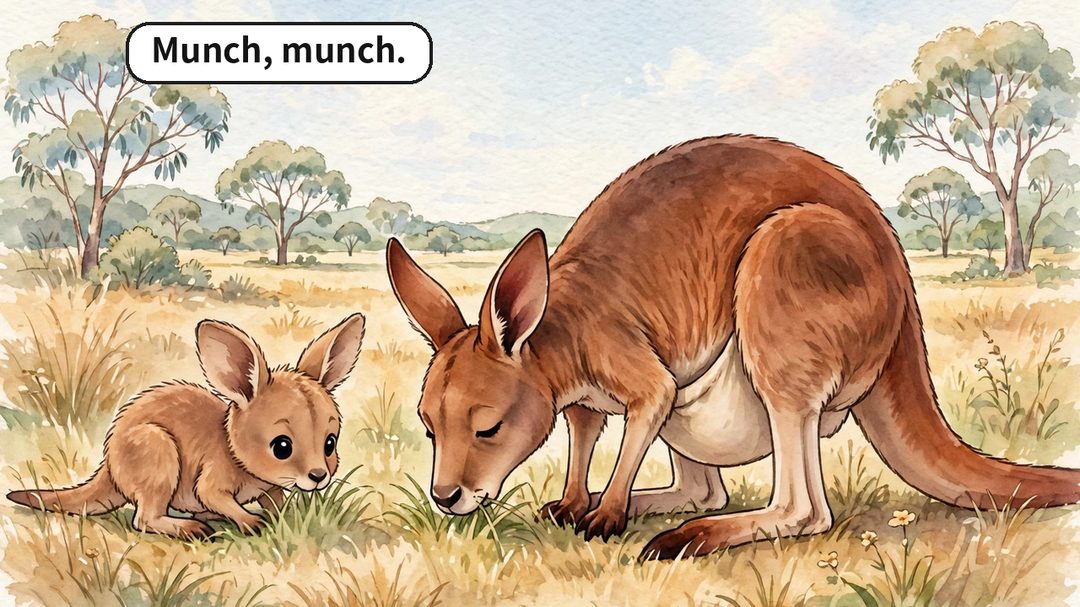
Reaching the grassland, the pair began to eat grass. It is said that a kangaroo spends more than forty percent of its day looking for grass and eating it. The grass slowly turns into nourishment thanks to tiny living things inside its belly. The joey copied her and nibbled on soft grass.
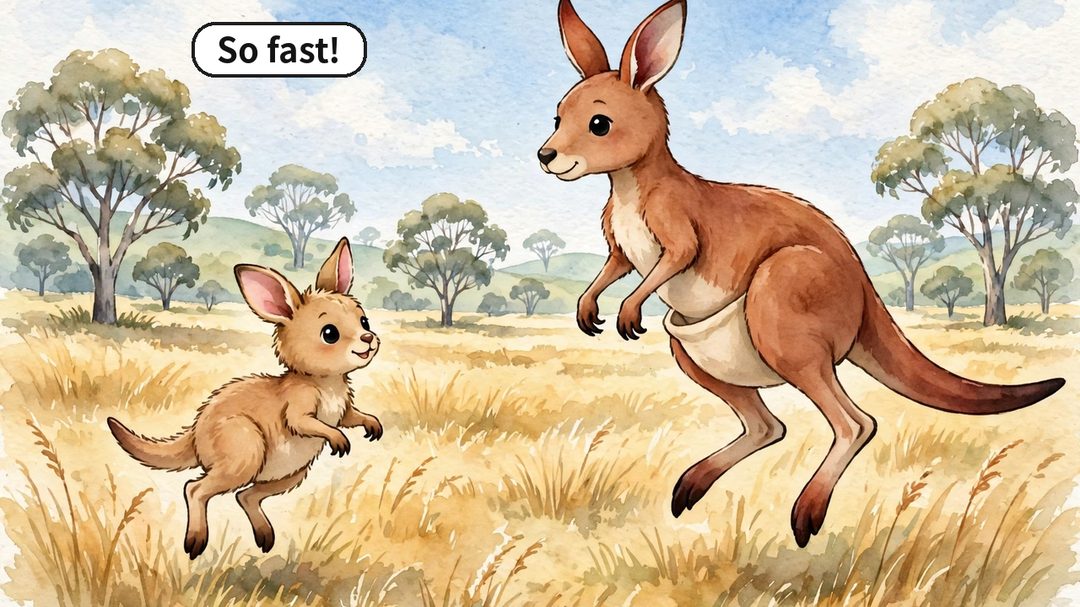
As the sun rose, the pair began to hop toward the water. The kangaroo is a curious animal: the faster it hops, the less energy it needs to move forward. The tendons in its legs return energy like springs. It can keep up a speed of about forty kilometers an hour, and over short distances, it can hop even faster.
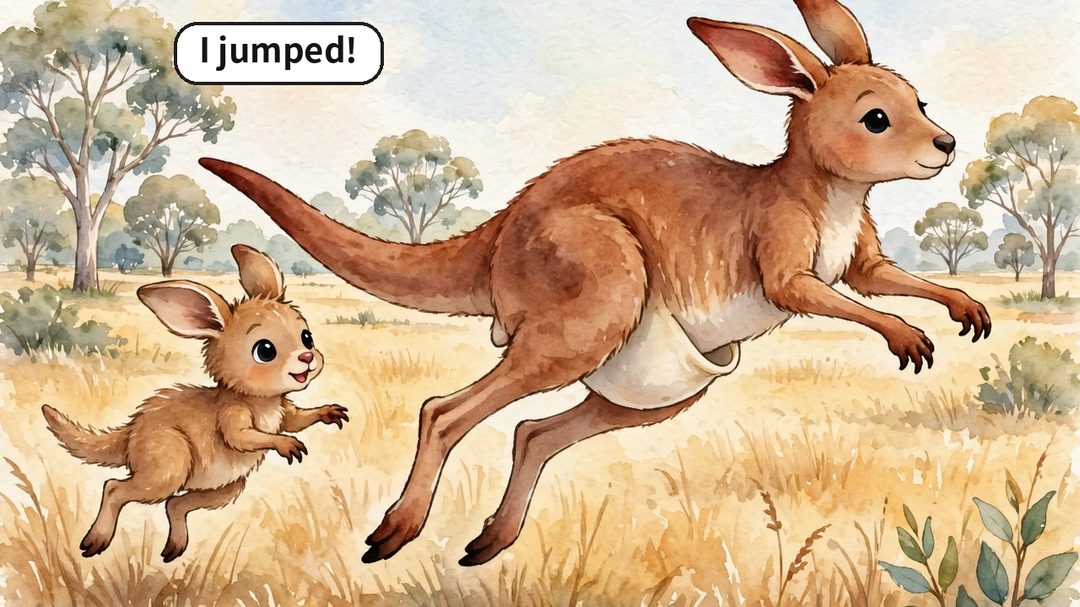
The mother's single bound is very large — up to about six meters, it is said. The joey, too, hopped with all its might in its small body. Its steps were still small, but it chased after its mother.
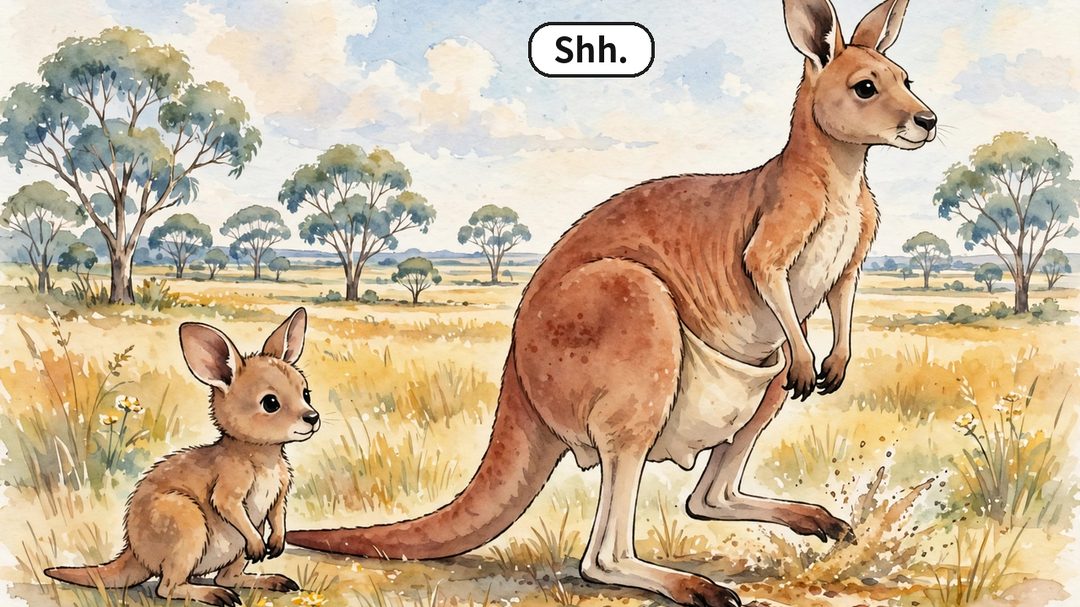
Just then, the mother struck the ground hard with her hind feet. With this thumping sound, kangaroos sometimes send a signal to their companions. Mother and joey pricked up their ears and watched for a while. The grassland was quiet, and there was nothing dangerous.
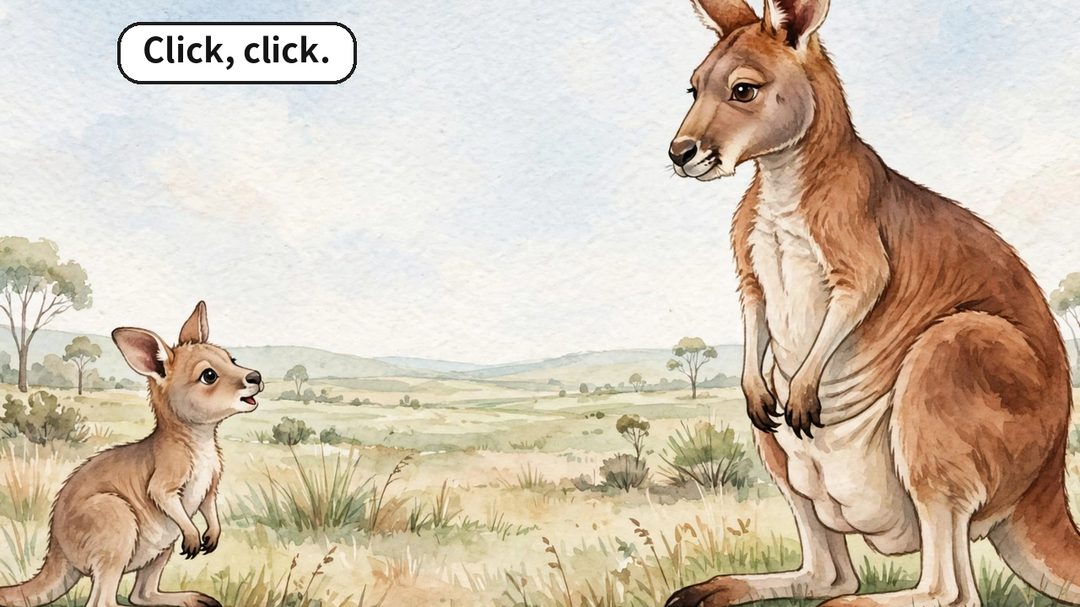
The mother made a small clicking sound. Mother and joey call to each other with this small voice. The joey answered with a small click, too. Hearing the voice, the joey drew close to its mother, looking relieved.
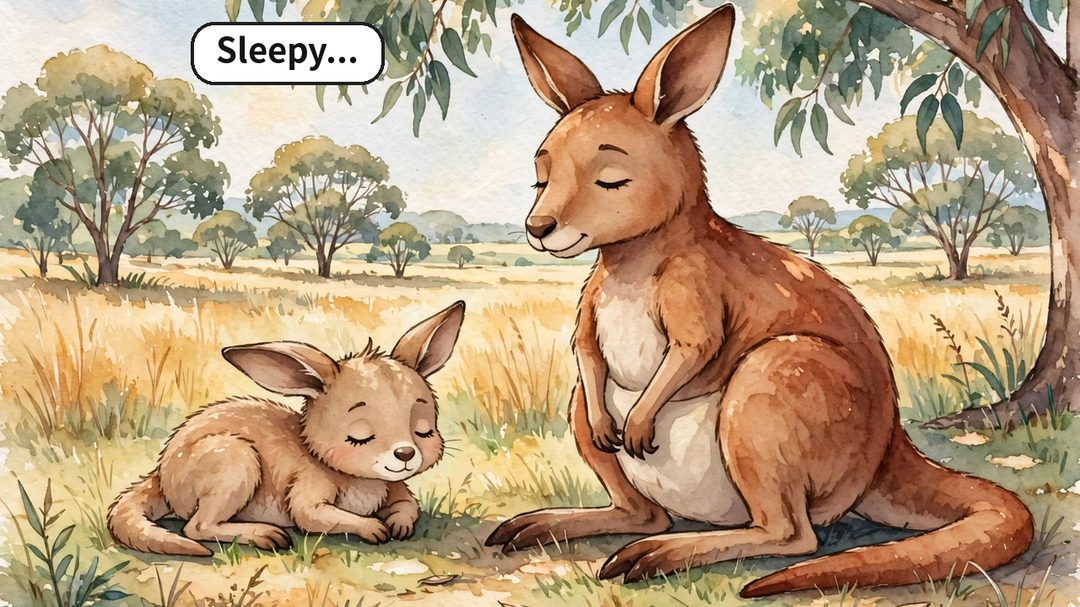
The sun climbed, and the grassland grew hot. In the hot daytime, kangaroos rest in the shade of trees. The pair rested their bodies in the shade of a big tree. Beside its mother, the joey dozed. The wind passed quietly over the grass. In the midday grassland, a calm time flowed.
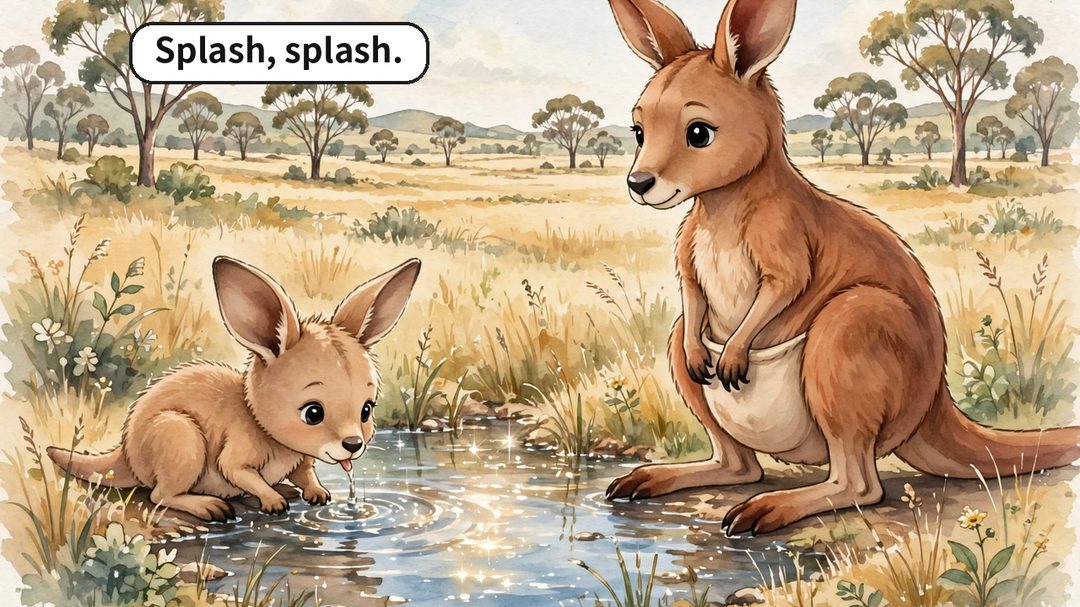
In the early afternoon, the pair stopped by the water. Kangaroos can actually swim, too. Kicking their hind legs in turn, they move through the water. The joey drank water at the water's edge and wet its feet a little. The mother watched over it nearby.
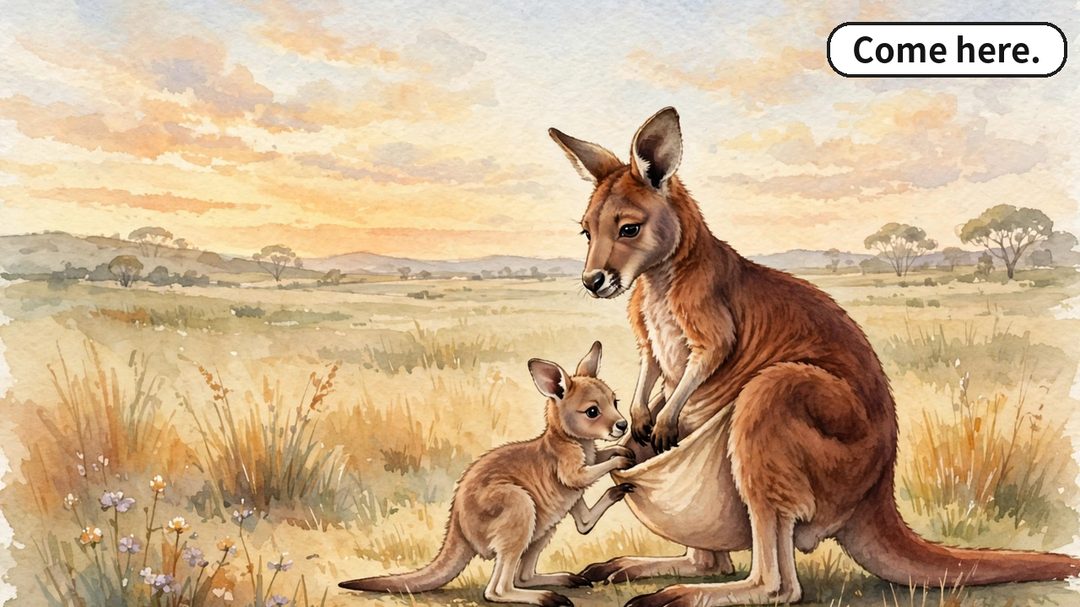
Tired from playing, the joey returned to its mother's pouch. Even a joey that has left the pouch puts its head in to drink milk until it is about one year old. The mother gently bent her body so the joey could return. Looking relieved, the joey curled up inside the pouch.
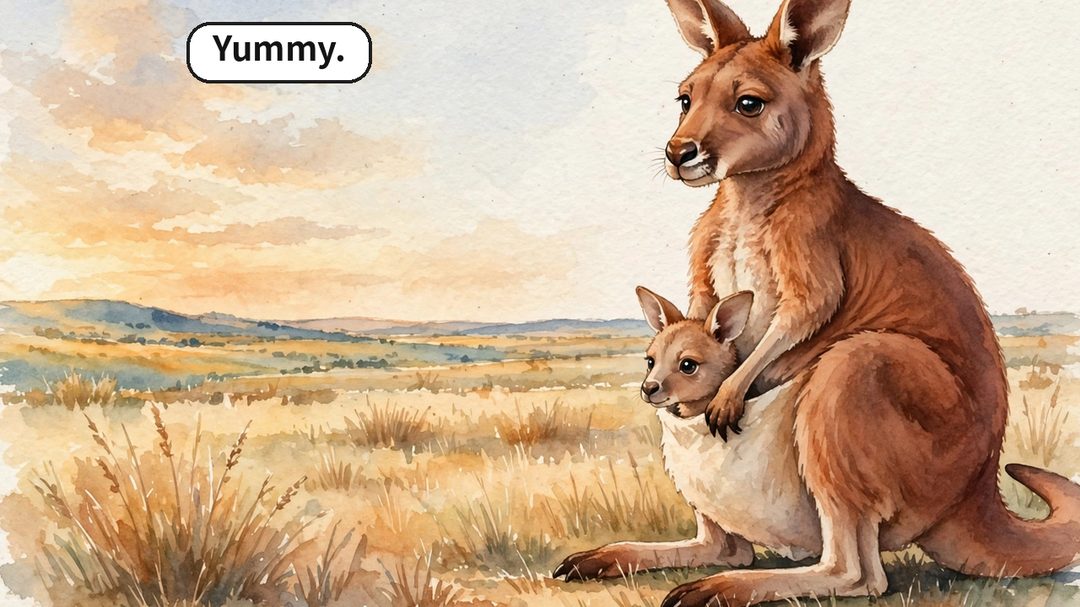
There is a secret in the mother's milk. A small baby in the pouch and a big joey playing outside need different milk. The mother can give different milk from each teat, at the same time. What is more, inside the mother's belly, the next baby can wait for the right time to be born.
Until the current joey grows, it waits, small and quiet.
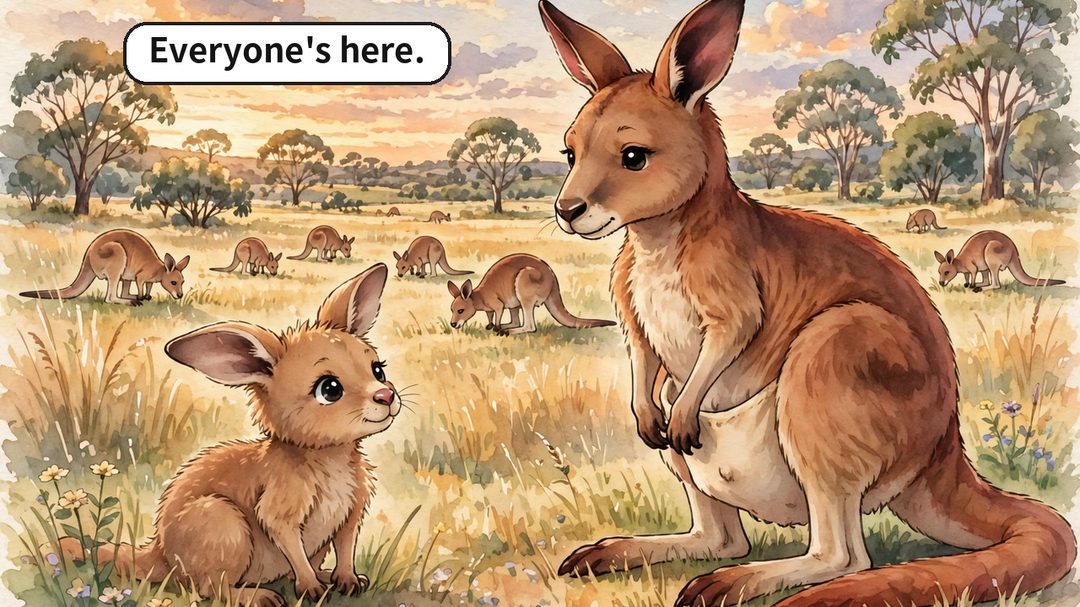
In the evening, companions nearby gathered to eat grass. Kangaroos live in small groups of about two to ten. The joey met the other joeys face to face. The mothers watched quietly nearby.
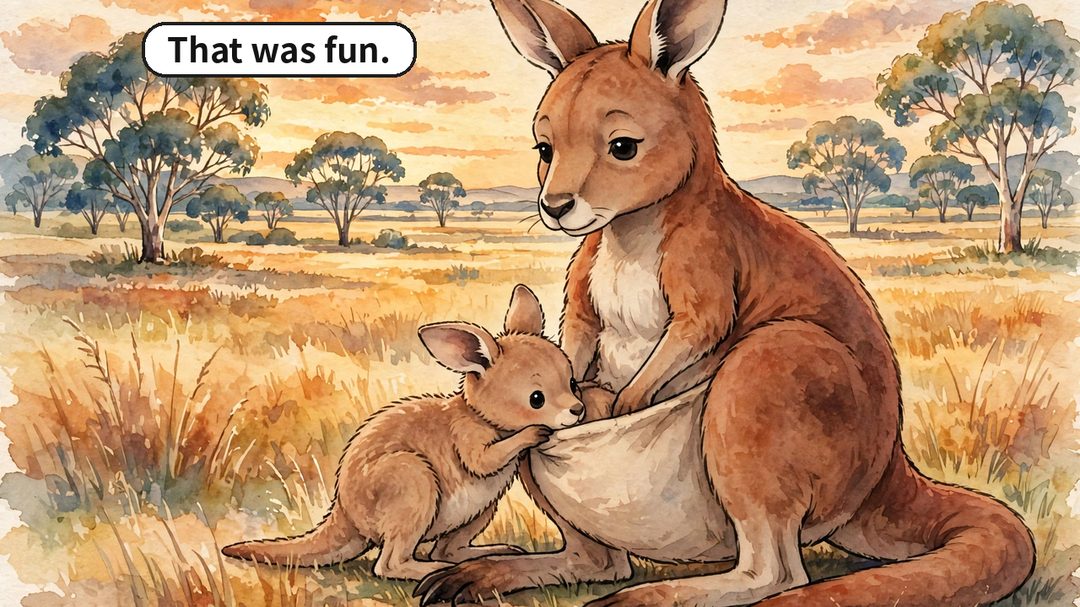
The sun leaned low, and the grassland turned sunset colors. The pair's day, too, drew toward its end. Big hind legs, a spring-like way of hopping, a dependable tail, and a pouch to feel safe in. At its mother's side, the joey was learning, little by little, the kangaroo way of life. The joey buried its head in its mother's pouch.
To the evening grassland, a quiet time had returned.
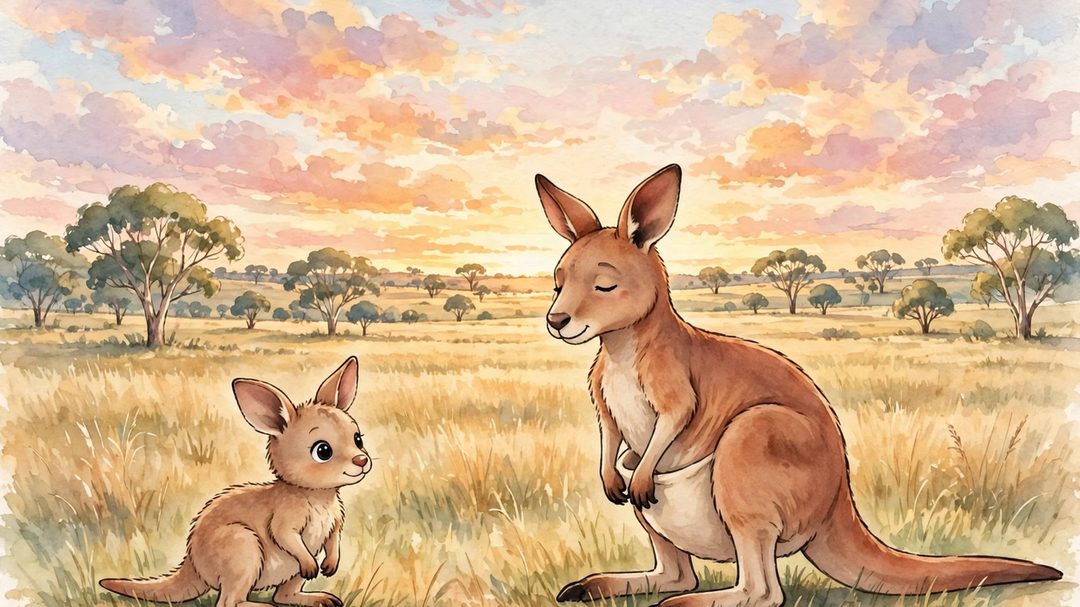
A day on the grassland begins in the morning and ends in the evening. Today, too, the pair's gentle day passed by.
Knowledge cards
Sources
- San Diego Zoo Wildlife Alliance Library「Red Kangaroo (Osphranter rufus) Fact Sheet: Summary」https://ielc.libguides.com/sdzg/factsheets/redkangaroo/summary
- San Diego Zoo Wildlife Alliance Library「Red Kangaroo Fact Sheet: Physical Characteristics」https://ielc.libguides.com/sdzg/factsheets/redkangaroo/characteristics
- San Diego Zoo Wildlife Alliance Library「Red Kangaroo Fact Sheet: Behavior & Ecology」https://ielc.libguides.com/sdzg/factsheets/redkangaroo/behavior
- San Diego Zoo Wildlife Alliance Library「Red Kangaroo Fact Sheet: Reproduction & Development」https://ielc.libguides.com/sdzg/factsheets/redkangaroo/reproduction
- San Diego Zoo Wildlife Alliance Library「Kangaroo Fact Sheet: Diet & Feeding」https://ielc.libguides.com/c.php?g=692977&p=4908674
- The animals' conversations (speech bubbles) in the stories are imagined.