Surprising Giraffe Facts | A Day with a Mother and Her Calf
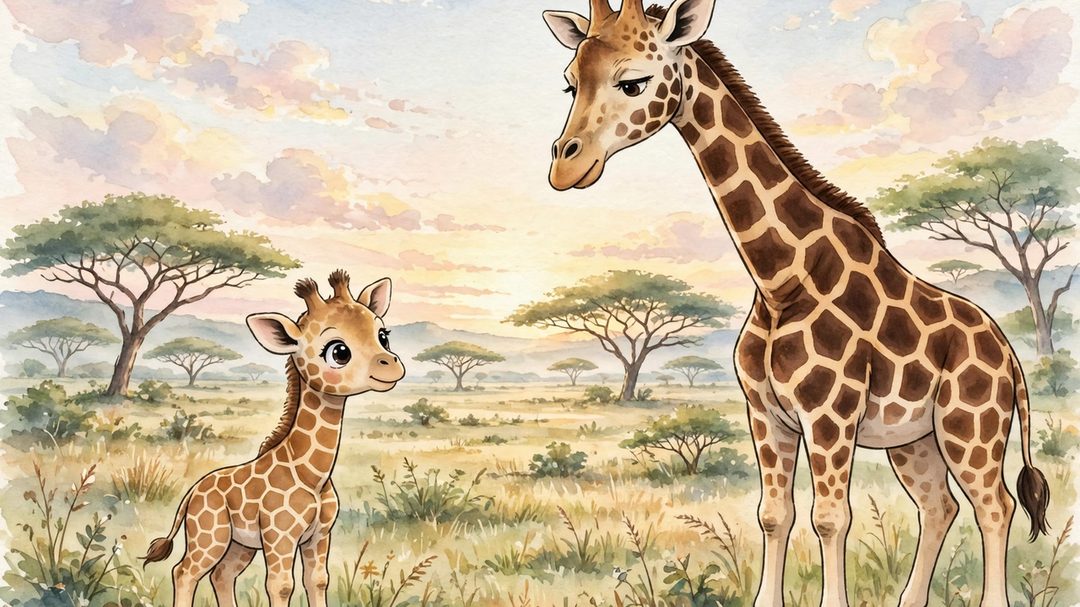
Today, we follow a giraffe mother and calf living on the African savanna. They eat the leaves of tall trees, look out over the distance, and spread their legs wide to drink at the waterhole. Let us watch their calm and gentle day.
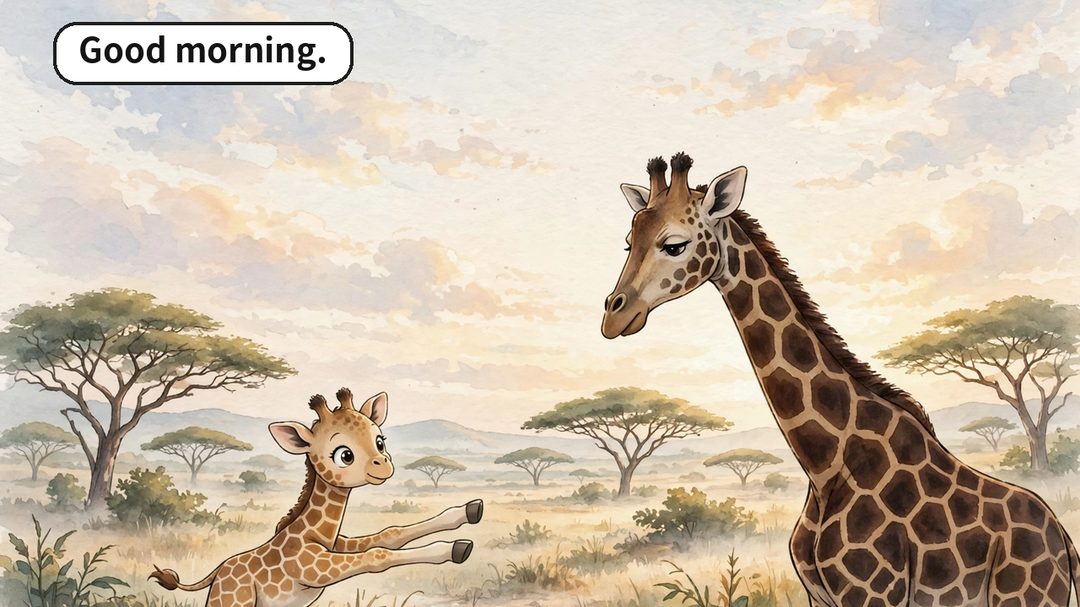
In the morning light, the mother and calf woke up. Beside his mother, the calf had a big stretch. The giraffe is the tallest land animal of all. A grown male can reach about five and a half meters, as tall as a two-story house.
From that high head, they can see far into the distance. Giraffes are also trusted lookouts for the other animals.
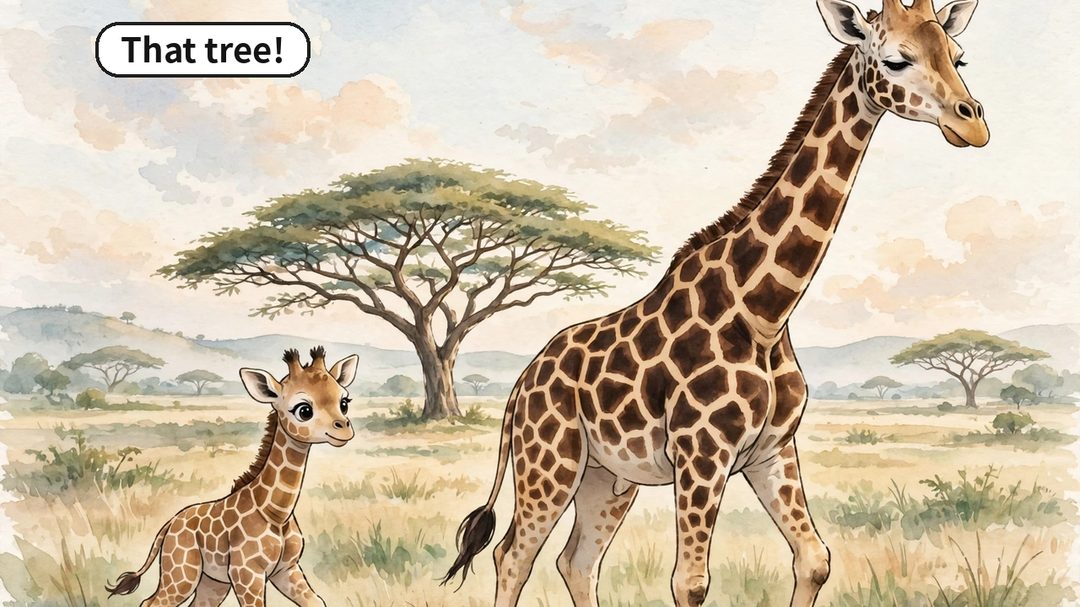
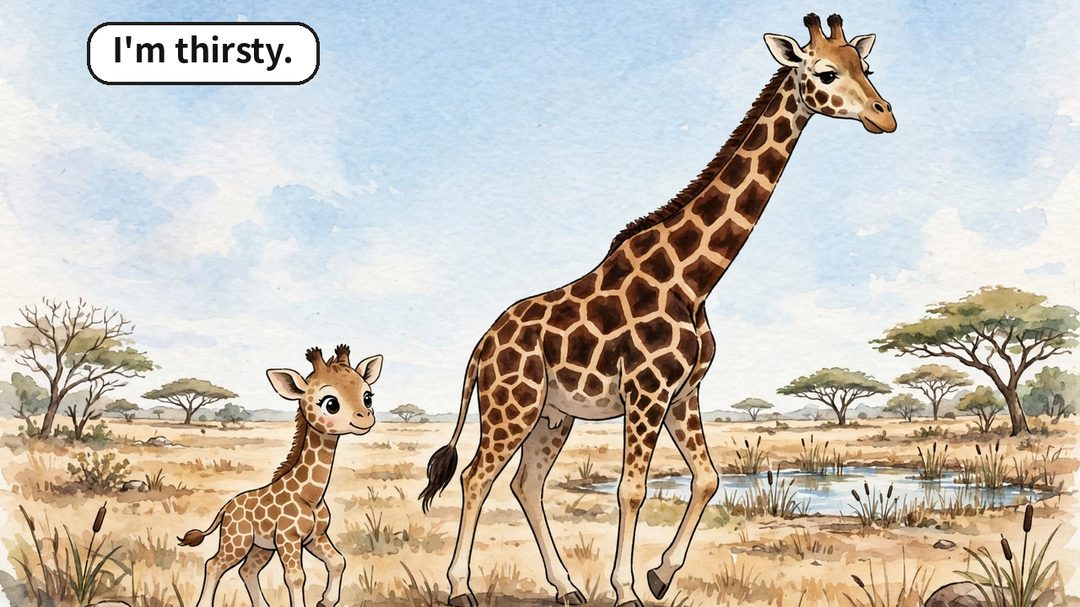
Breakfast is at an acacia tree, a little way off. Side by side, the pair set off walking. A giraffe's way of walking is a little unusual. It moves the legs on the same side together, first the right pair, then the left. The pair usually walks slowly, but when they run, they can reach about sixty kilometers an hour, it is said.
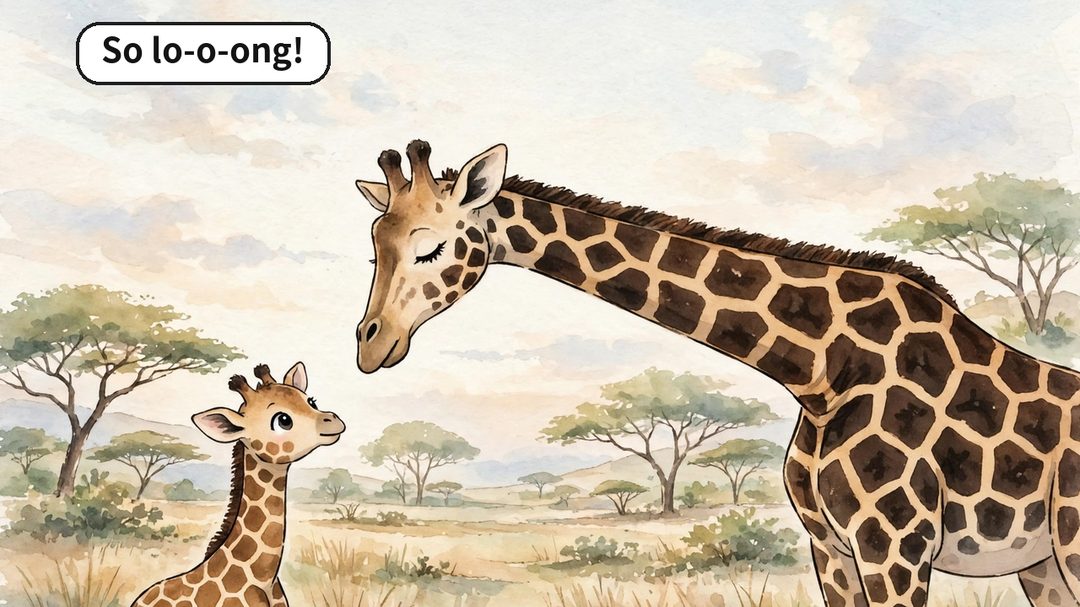
Along the way, the calf looked up at his mother's long neck. Long as that neck is, it has only seven bones, the same number as a human neck. Each bone is simply very long.
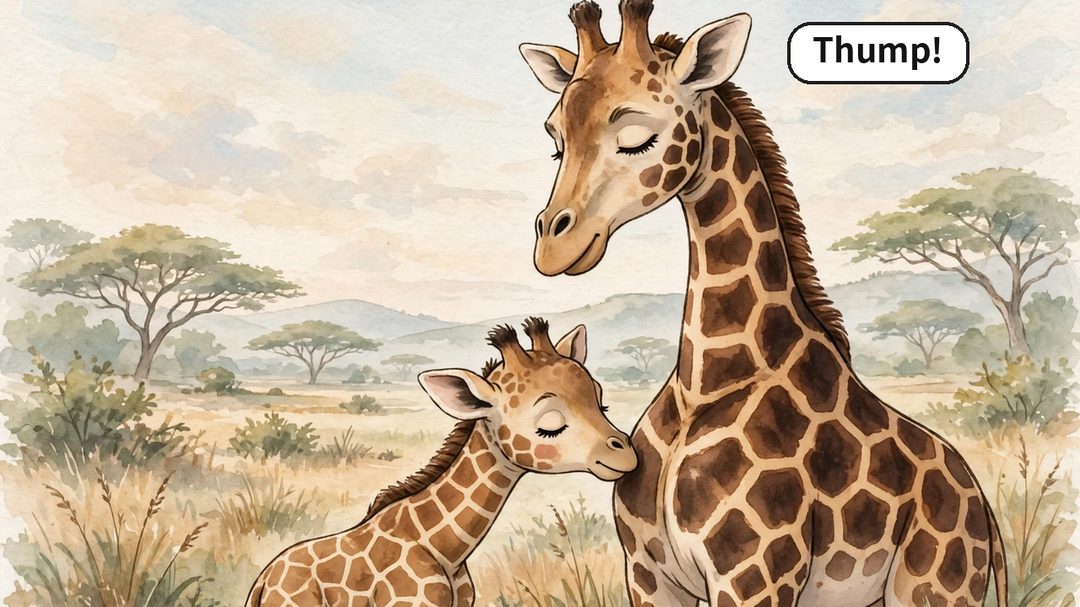
In the quiet morning grassland, the calf gently pressed his ear to his mother's chest. Thump, thump. He could hear a big, powerful sound. A giraffe's heart weighs about eleven kilograms, and it sends blood all the way up to a head two meters above.
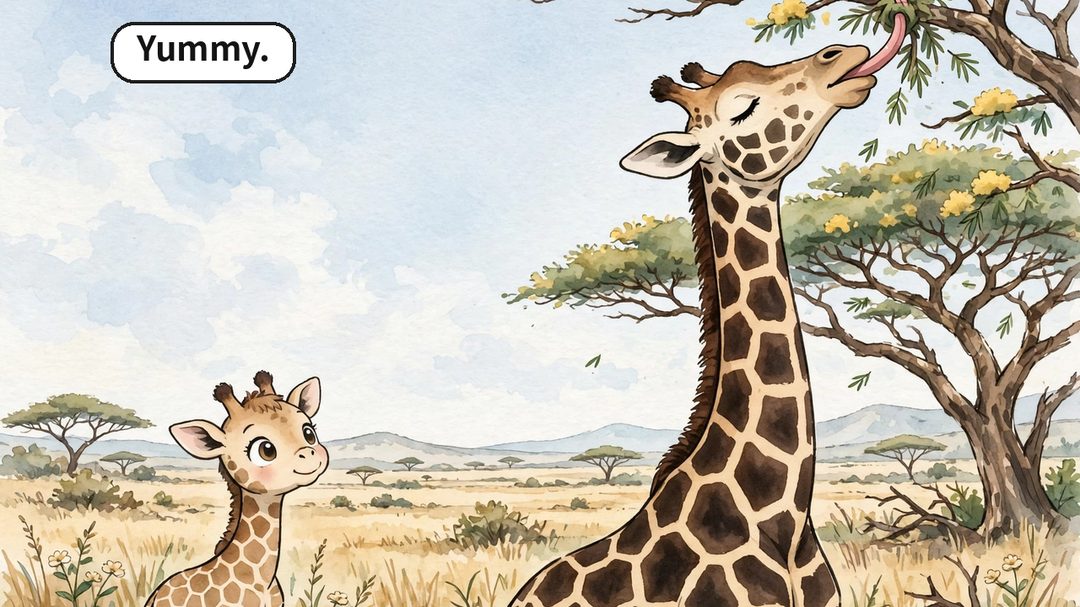
When they reached the acacia tree, the mother stretched her face up to the high branches. Her long tongue curled around a branch and pulled the leaves closer. A giraffe's tongue is about fifty centimeters long. The tip of the tongue is blue-purple.
Because the tongue is out in the strong sun all day, the color is thought to protect it from sunburn.
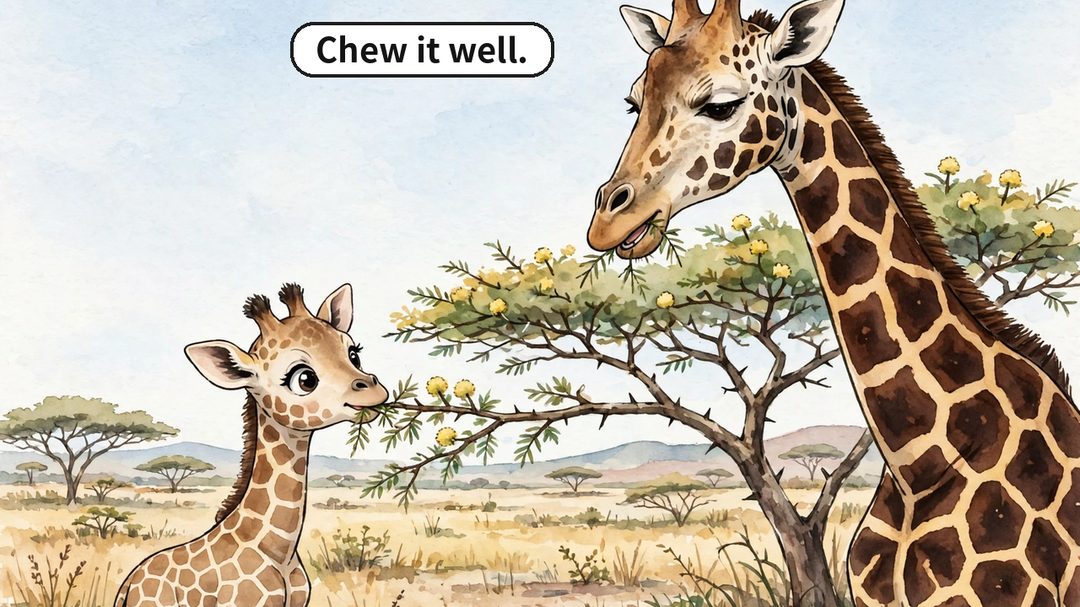
The calf tried the leaves of a low branch, copying his mother. A giraffe's day is centered on eating. It spends most of the day eating leaves and chewing them over again. Leaves it has swallowed come back up into its mouth.
Then it chews them slowly, one more time.
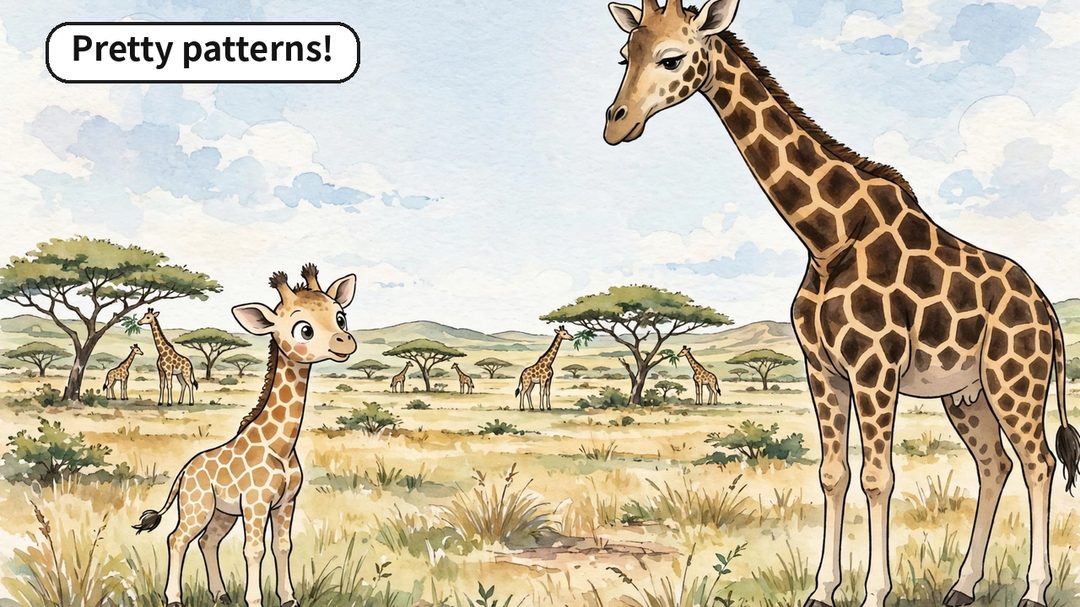
Look closely, and the pair's patterns are not the same at all. Every giraffe's pattern is one of a kind. No two are alike. Far away, other giraffes were eating leaves, too, taking their time. The faces in the herd change a little from day to day.
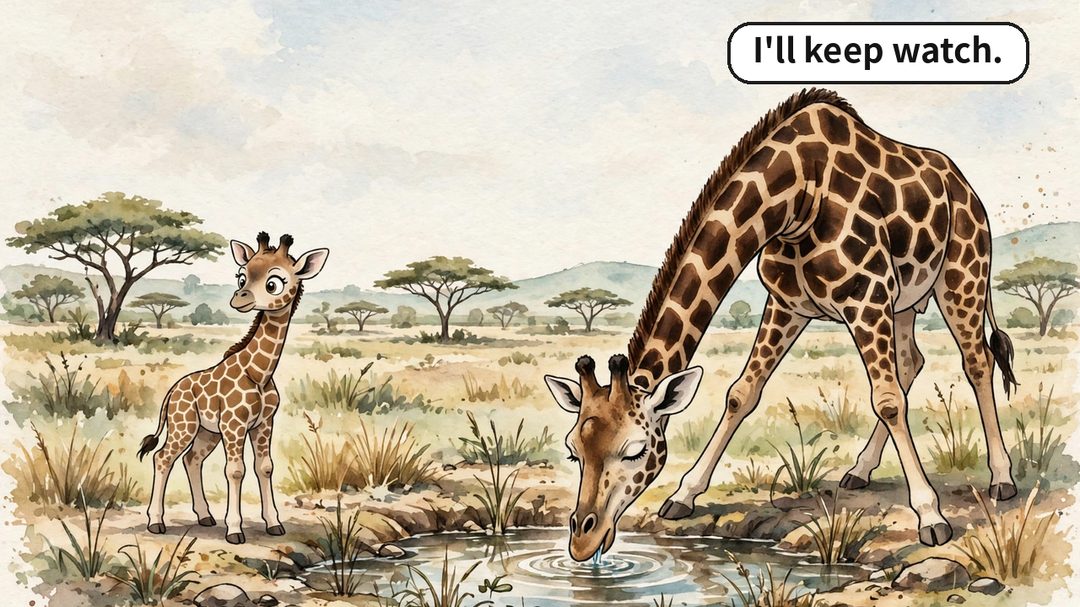
As the sun climbed, the pair headed for the waterhole. With each step, the dry grass rustled softly. Drinking is a bit of a big job for a giraffe. While its head is down, it cannot see its surroundings well.
The mother spread her front legs wide and gently lowered her head. Her legs are longer than her neck, so without this, her mouth could not reach the water. Beside her, the calf kept his head up and watched the surroundings.
The pair took turns drinking.
Before this calf was born, the mother carried him inside her for about fifteen months. At birth, he was already about one point eight meters tall, as big as a grown human, and soon after he was born, he stood up on his own legs.
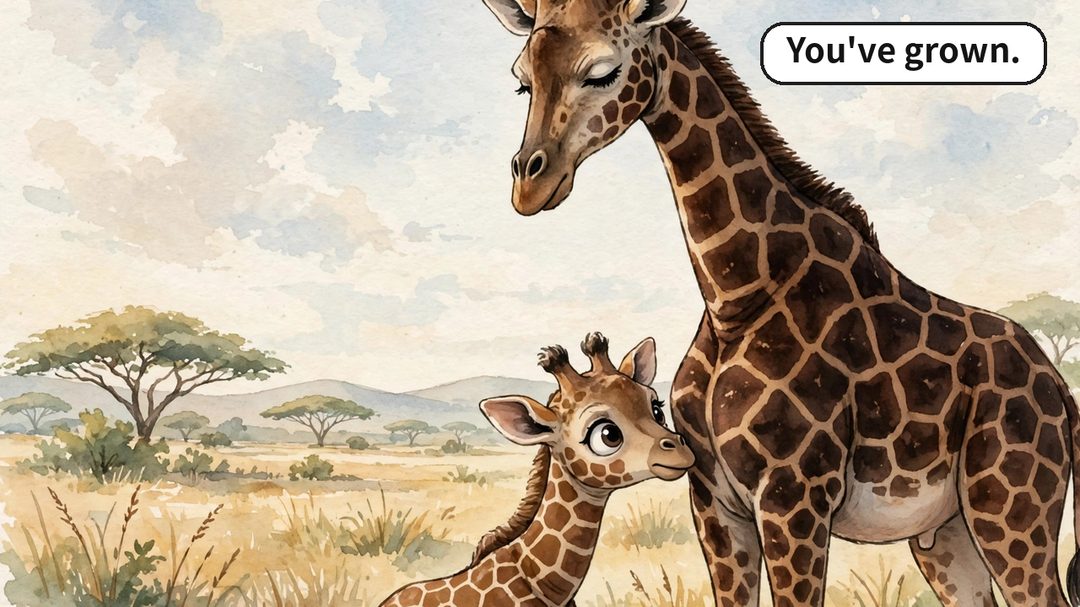
Since then, time has passed, and the calf has grown to about half his mother's height.
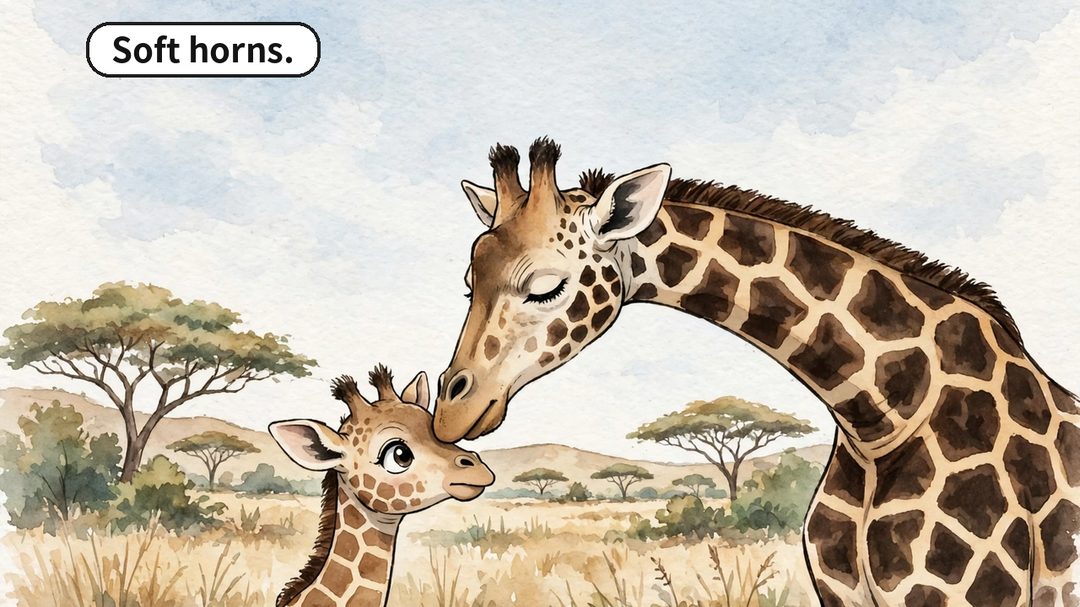
On the calf's head, there are small horns. When he was born, these horns were made of soft cartilage. As he grows, they slowly turn to bone. The mother gently touched the top of her calf's head with the tip of her nose. A quiet greeting between parent and child.
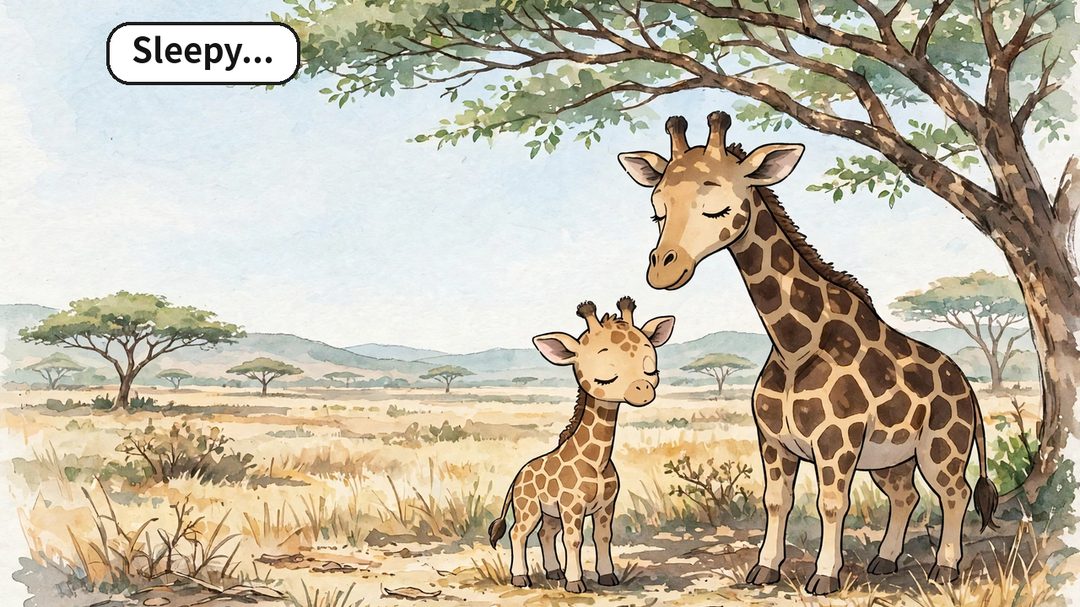
In the hottest part of the day, they rest in the shade of a tree. The mother keeps moving her mouth, chewing the leaves over. Sometimes, she closes her eyes while still standing. A giraffe's sleep is short, and most of it is dozing on its feet.
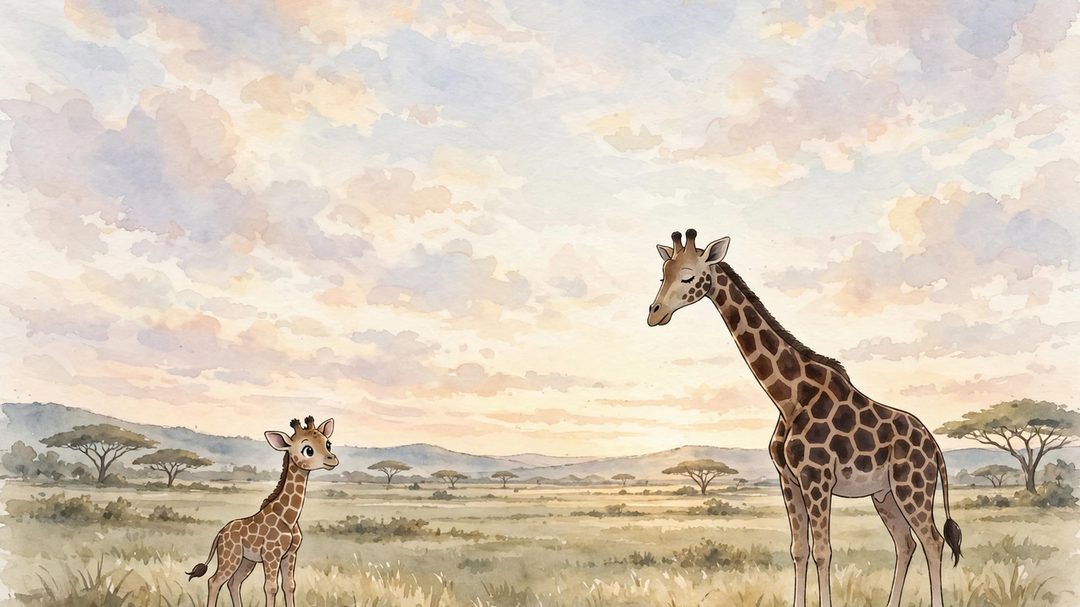
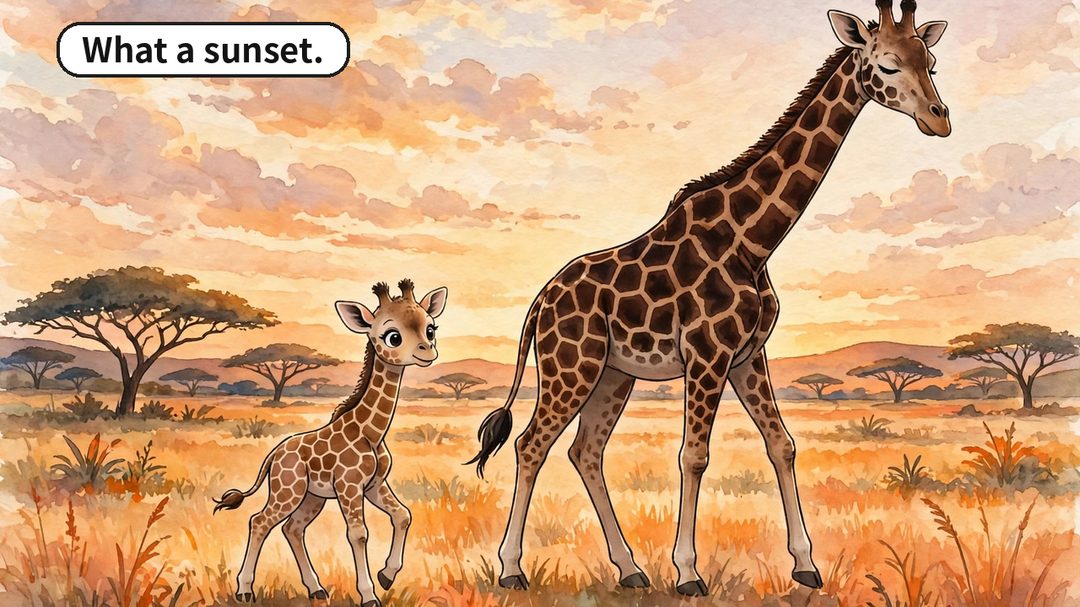
As the sun sank, the grassland was dyed in the colors of the sunset. Side by side, the pair slowly walked back along the path they had come by in the morning.
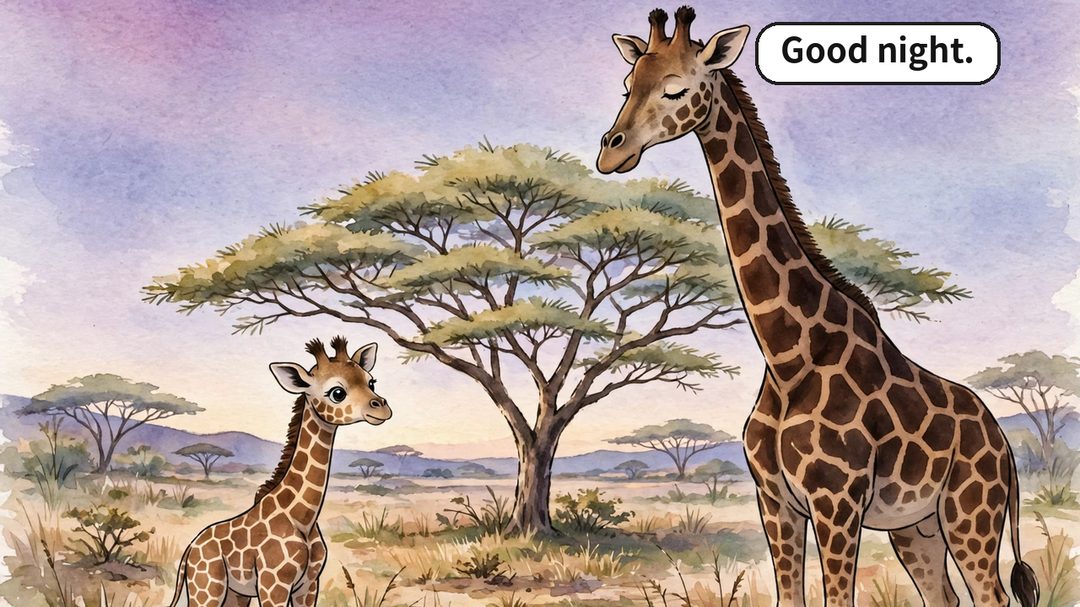
When the sky turned purple, the pair reached the big tree. On the night savanna, a giraffe sometimes hums in a low, small voice, it is said. That mysterious voice was first confirmed in recordings made by researchers. During the day, the pair hardly ever makes a sound.
It may be a special voice, heard only in the quiet of the night.
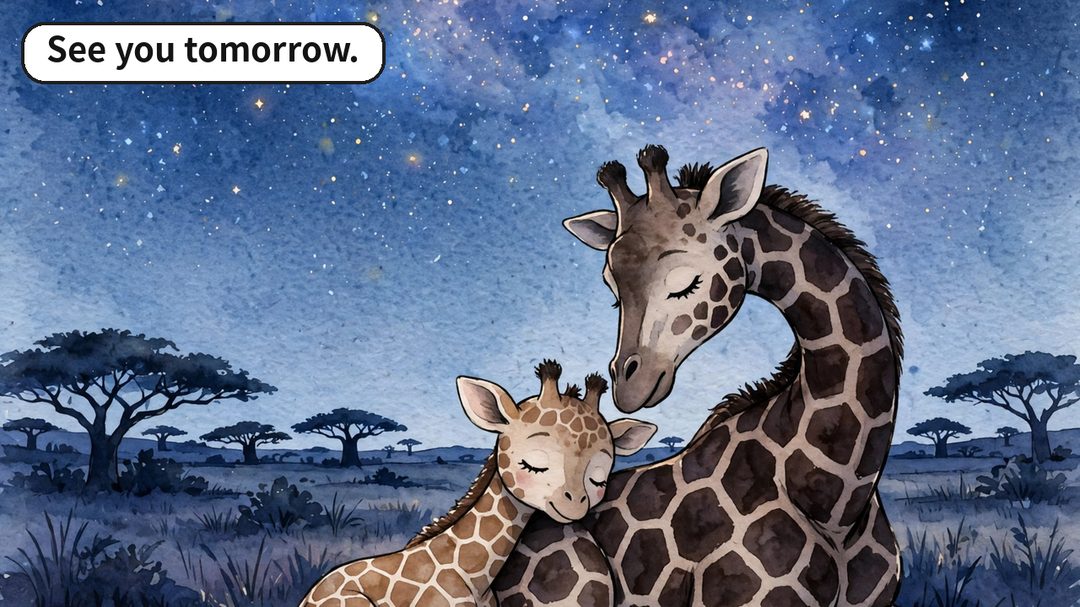
Stars began to appear. The calf leaned against his mother's body and closed his eyes. A high head, a big heart, and a gentle tongue. The pair's calm day quietly came to an end.
On the wide savanna, another day of the pair's life passed today. Tomorrow, too, under the high sky.
Knowledge cards
Sources
- San Diego Zoo Wildlife Alliance Library「Giraffes (Giraffa spp.) Fact Sheet」https://ielc.libguides.com/sdzg/factsheets/giraffes
- San Diego Zoo Wildlife Alliance Library「Giraffes Fact Sheet: Physical Characteristics」https://ielc.libguides.com/sdzg/factsheets/giraffes/characteristics
- San Diego Zoo Wildlife Alliance Library「Giraffes Fact Sheet: Behavior & Ecology」https://ielc.libguides.com/sdzg/factsheets/giraffes/behavior
- Giraffe Conservation Foundation「14 fascinating facts about giraffe」https://giraffeconservation.org/facts-about-giraffe/14-fascinating-facts-about-giraffe/
- National Geographic Kids「Giraffe」https://kids.nationalgeographic.com/animals/mammals/facts/giraffe
- 東山動植物園 公式ブログ「キリンの首の骨はいくつ?」https://www.higashiyama.city.nagoya.jp/blog/2016/10/post-2845.html
- パース動物園「Giraffe motherhood」https://perthzoo.wa.gov.au/article/giraffe-motherhood
- The animals' conversations (speech bubbles) in the stories are imagined.