Surprising Capybara Facts | A Calm Day with a Mother and Her Pup

Today, we follow a capybara parent and pup living at a zoo in winter. Capybaras come from the watersides of South America. They swim in the water, eat grass, and soak in hot springs. Let us watch their calm and gentle day.
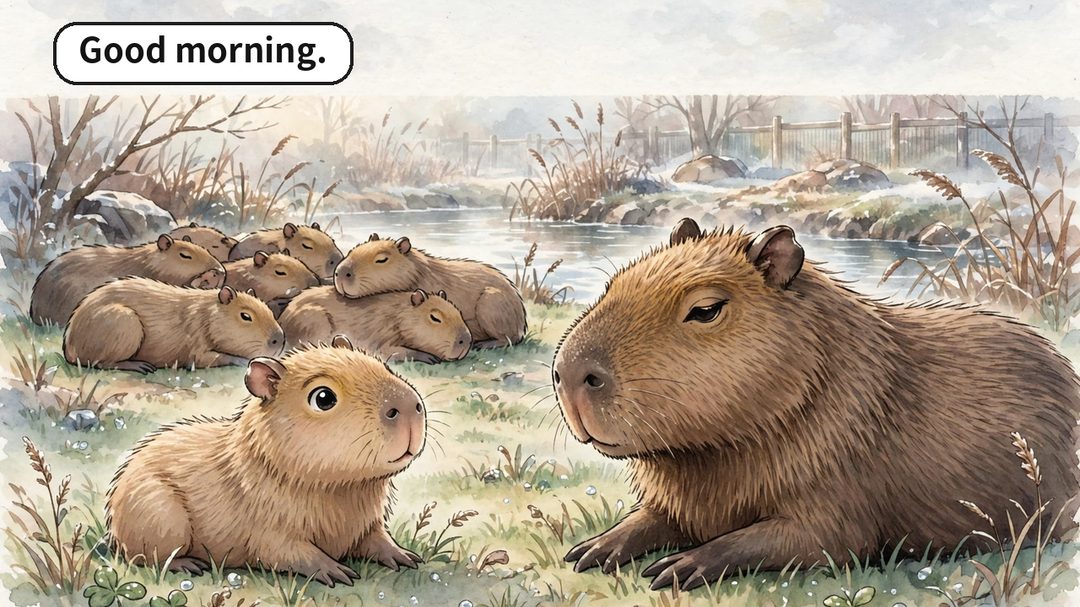
In the morning light, beside the herd, the parent and pup woke up. Capybaras are relatives of mice and guinea pigs, and at around fifty kilograms, they are the largest rodents in the world. At this zoo, too, the pair lives within a family herd of about ten.
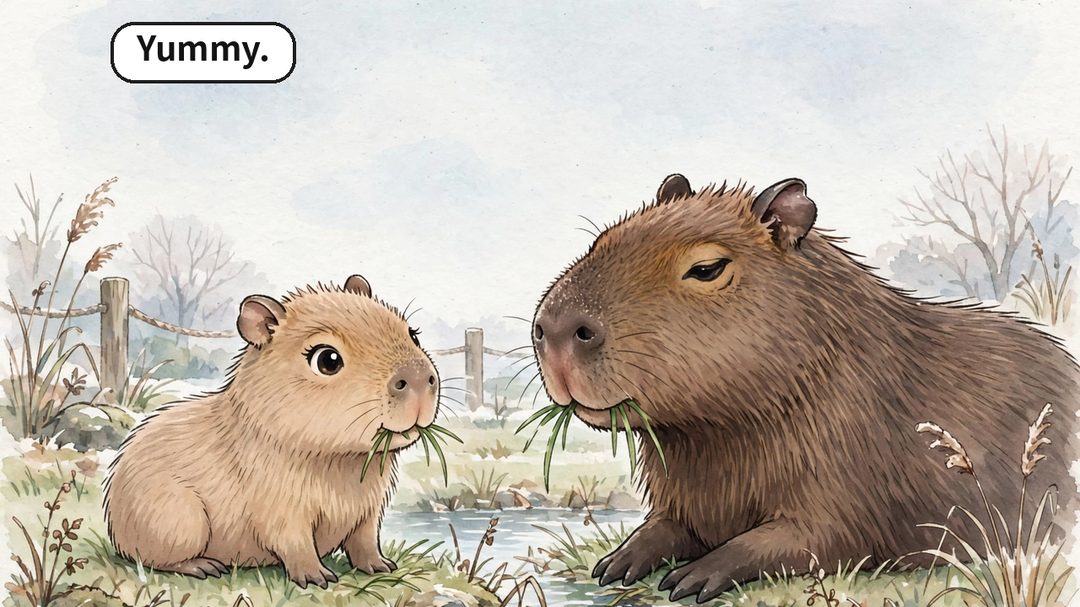
Breakfast is the grass of the zoo's meadow. Side by side, the pair slowly began to eat. To keep up their large bodies, capybaras eat about three kilograms of grass every day. The name capybara comes from a word of the native peoples of South America, and it means, the one who eats grass.
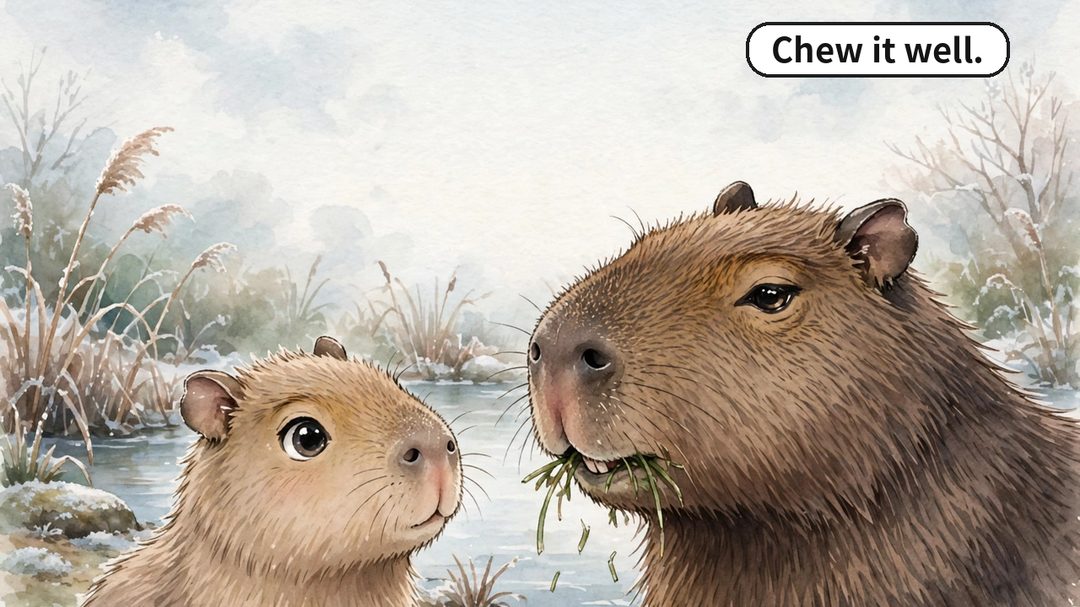
Watching them eat up close, you can see their mouths moving without rest, grinding the grass down. A capybara's teeth keep growing all through its life. Grinding tough grass to eat keeps them at just the right length.
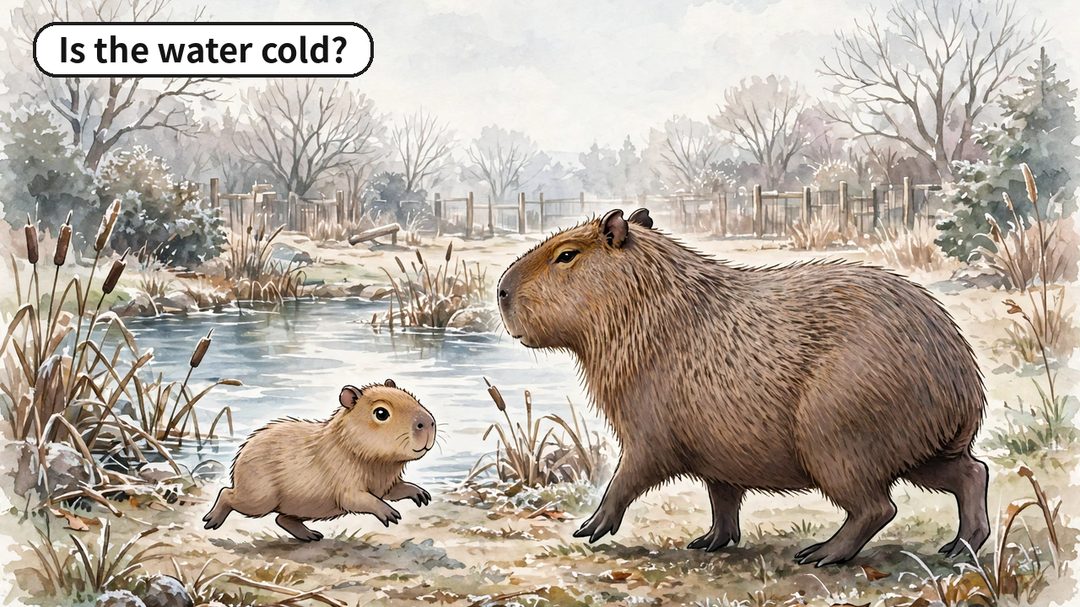
After eating, the pair headed for the water. The pup hurried after its mother at a little trot. Between a capybara's toes, there are small webs of skin. Those webs are what give it the power to move through the water.
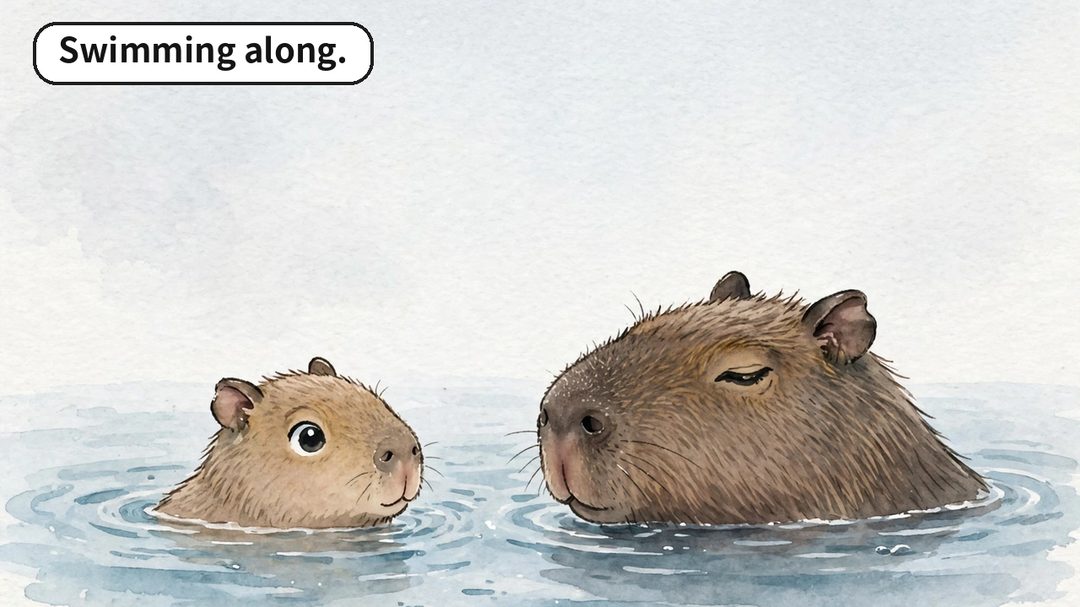
The mother slipped into the water. The pup gently followed her in. As it swims, a capybara's body is almost entirely under the water. All that shows above the surface is its eyes, ears, and nose, lined up on top of its head.
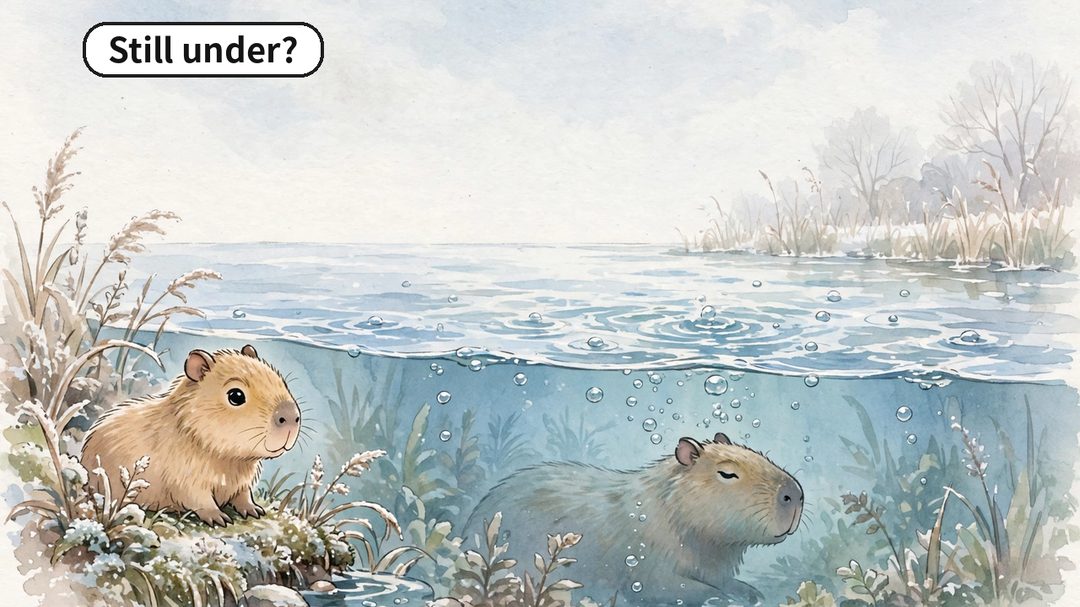
Its body is just a little heavier than water, so it can sink without effort and swim along quietly.

The mother slid quietly down into the water. The pup waited patiently at the water's edge. A capybara can hold its breath and stay underwater for about five minutes. When danger comes, it hides in the water and waits for it to pass.
Back on the bank, a small bird landed on the mother's back. The bird pecks up and eats the insects in the capybara's fur. The capybara stays perfectly still, letting the bird ride.
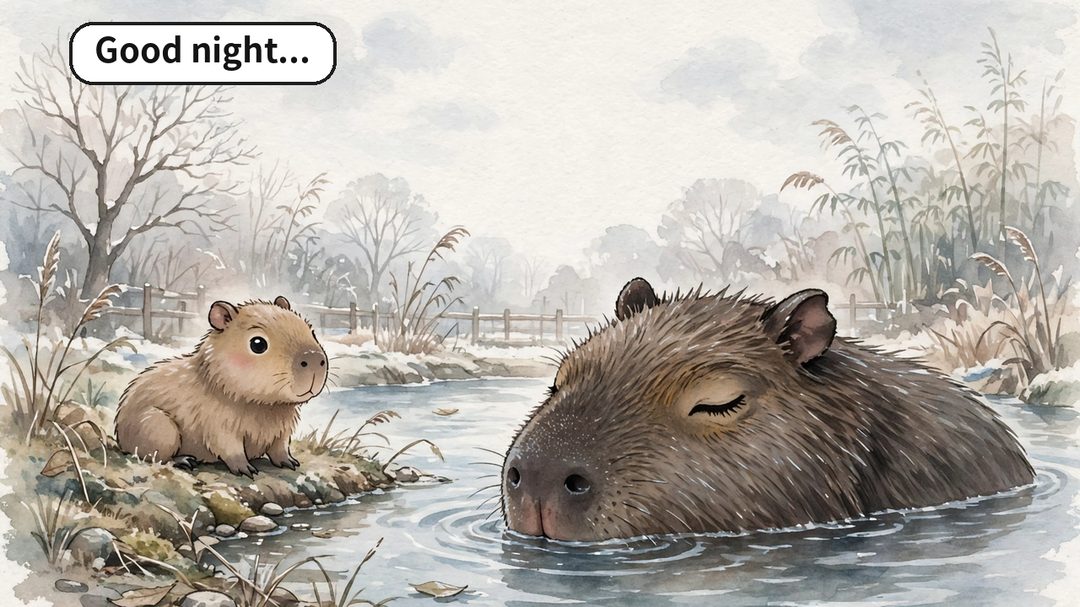
As midday drew near, the mother closed her eyes in the water. Capybaras sometimes sleep in the water. With only their noses above the surface, they breathe quietly and doze.
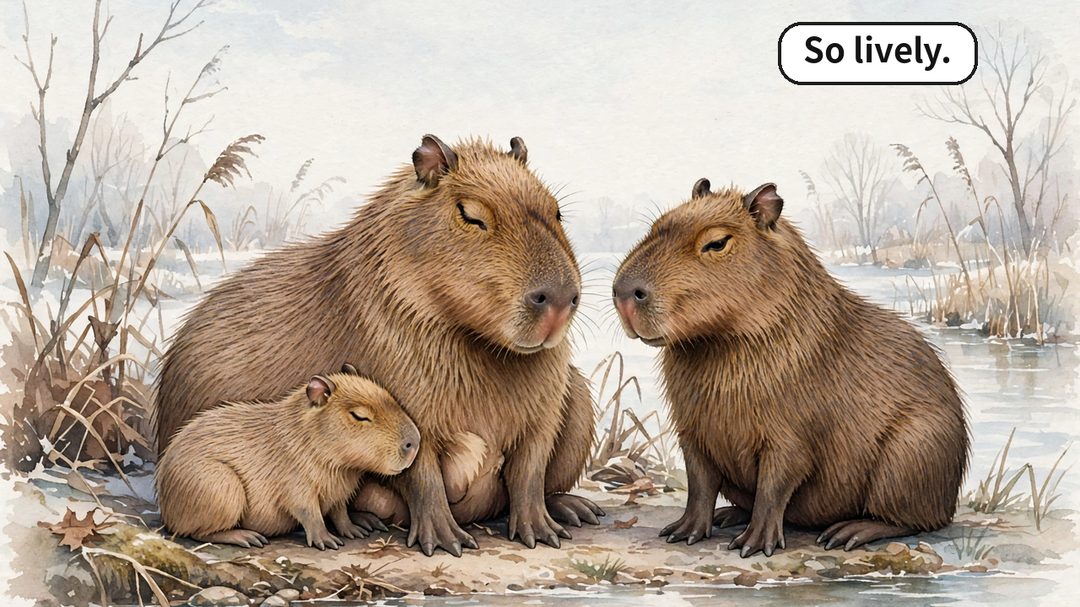
Nearby, the pup pressed its face to the belly of another female in the herd. A baby capybara can stand up and walk right after it is born. In about a week, it starts eating grass, too. And it can drink milk not only from its mother, but from the other females in the herd as well.

Raising the young is a job for the whole herd.

In the quiet afternoon, a small purring sound came from the pup's throat. Capybaras keep in touch with many kinds of voices, like barking calls and whistle-like calls. A loud cry in danger becomes a signal to the herd.

In the afternoon, the keeper began to fill the open-air bath with hot water. Steam rose up into the winter sky. The custom of capybaras taking baths at Japanese zoos began in 1982, at a zoo in Izu. It started when a capybara was found soaking happily in a puddle of warm cleaning water.
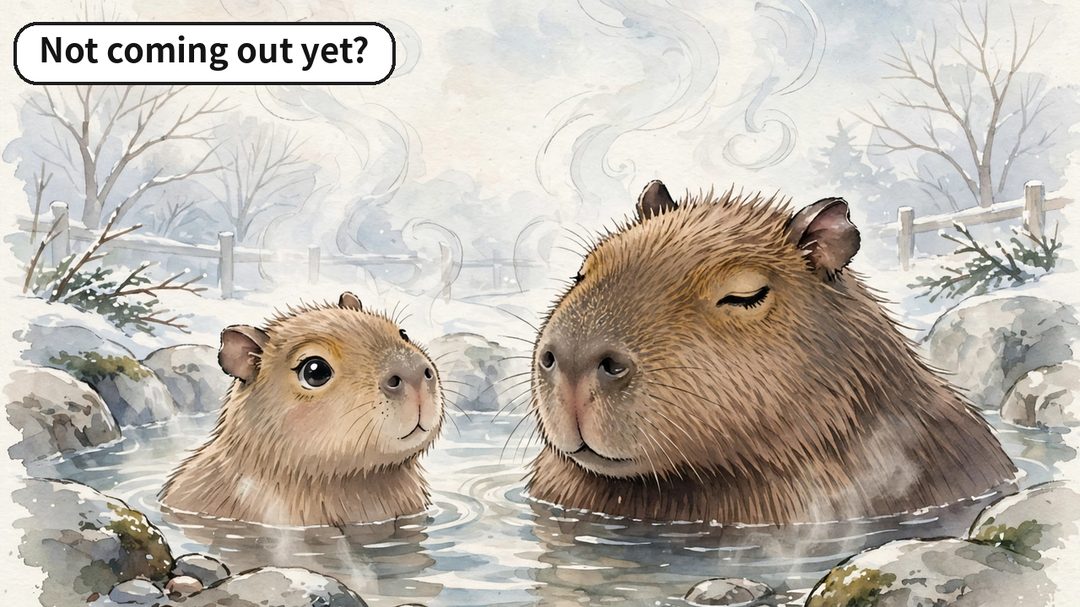
Once the bath was full, the mother gently put her feet in first. The pup pressed close to its mother and got into the bath, too. In the warm water, the two of them slowly relaxed, body and all.
Once they are in the bath, the capybaras do not come out for a long time. Once in the bath, a capybara will sometimes stay soaking quietly for about an hour.

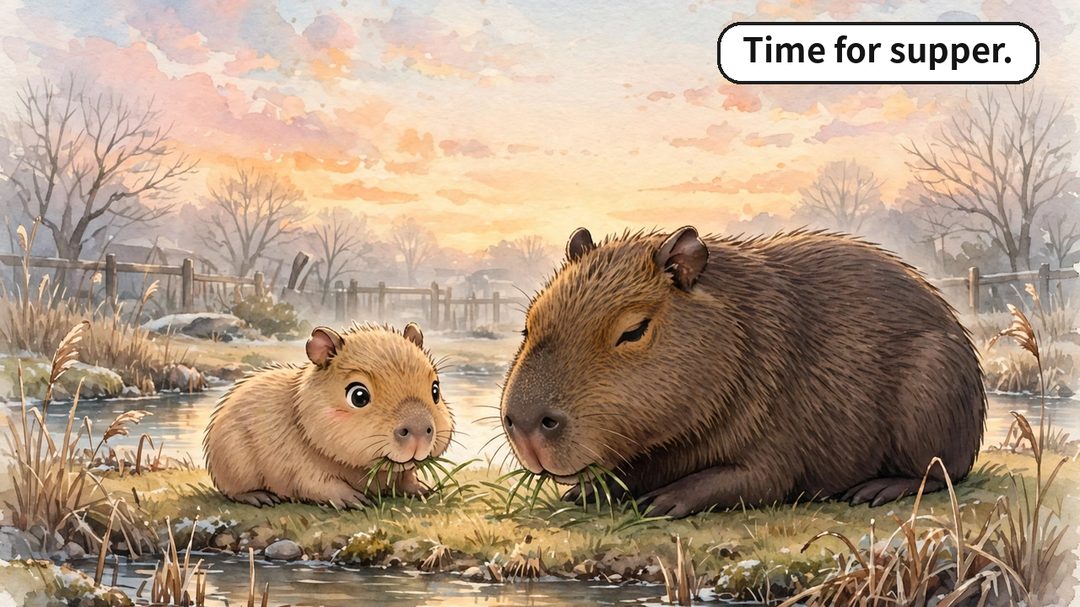
After the bath, it was time for the evening meal. As the sun went down, the capybaras began eating grass again. Capybaras eat plenty of grass from evening into the night. They spend the hot daytime in the water, and eat during the cooler hours.

Side by side, in the colors of the setting sun, the pair went on quietly eating their grass.
As dusk fell, everyone in the herd gathered on the grass by the water. Their bodies pressed together, the capybaras closed their eyes. The pup curled up small beside its mother.
Surrounded by water, grass, and companions, the capybaras' calm day slowly drew to a close.
Knowledge cards
Sources
- San Diego Zoo Wildlife Alliance Library「Capybaras (Hydrochoerus spp.) Fact Sheet」https://ielc.libguides.com/sdzg/factsheets/capybaras
- San Diego Zoo Wildlife Alliance Library「Capybaras Fact Sheet: Physical Characteristics」https://ielc.libguides.com/c.php?g=692932&p=4909206
- San Diego Zoo「Capybara」https://zoo.sandiegozoo.org/animals/capybara
- ミシガン大学 Animal Diversity Web「Hydrochoerus hydrochaeris」https://animaldiversity.org/accounts/Hydrochoerus_hydrochaeris/
- 伊豆シャボテン動物公園「元祖カピバラの露天風呂」https://izushaboten.com/animal/kapibara/kapiroten/
- Hertfordshire Zoo「Capybaras at Hertfordshire Zoo」https://hertfordshirezoo.com/animals/small-mammals/capybara/
- Auckland Zoo「Capybara」https://www.aucklandzoo.co.nz/animals/capybara
- The animals' conversations (speech bubbles) in the stories are imagined.